
Reviewed · HISTORICAL TOURS
Private Mystic Zermatt Tour: Peaks, History & Culture
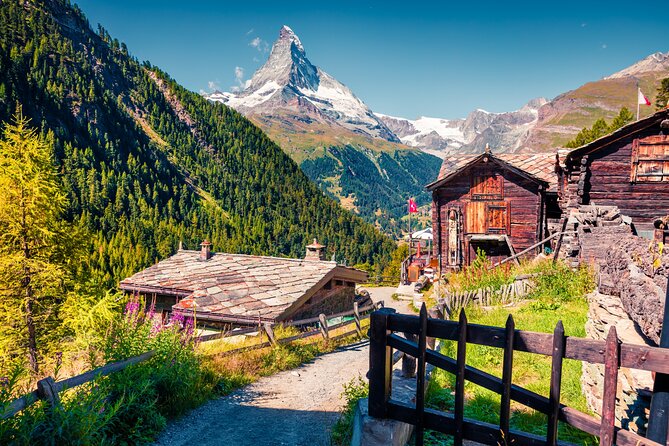
Zermatt’s best stories are not all found on a mountain train. They are tucked into a quiet church, a row of weathered barns, and the small cemetery where climbers who never came home are remembered. This private walking tour links those places with the story of how the Matterhorn changed Zermatt forever.
I like the personal format, especially for a short visit. You get your own guide rather than trailing behind a large crowd, and the tour gives you two useful things: local history and a gentle orientation to the village. Guides Mike and Elizabeth have both been praised for warm, engaging storytelling, along with practical suggestions for eating and shopping.
The main drawback is the price: $499 per person for about two hours is a serious outlay. Also, the route covers a small central part of Zermatt, so independent walkers may feel they could find several stops on their own.
In This Review
- Key points to know before booking
- Why this private walk helps you read Zermatt
- St. Mauritius Church: start with Zermatt’s quiet side
- Matterhorn Museum: a short look at the mountain story
- Mountaineers’ Cemetery: the most meaningful stop
- Kirchbrücke: the best place for a village view
- Hinterdorfstrasse: old barns in the middle of town
- St. Peter’s Chapel: a small pause for local art
- Ending at Gornergrat Railway
- The guide makes or breaks this experience
- Is $499 per person a fair price?
- Who should book this Zermatt tour?
- Booking, timing, and cancellation details
- Should you book it?
- FAQ
- Where does the tour begin?
- Where does the tour end?
- How long does the tour last?
- Is this a private tour?
- What languages are available?
- Does the tour include admission tickets?
- Does the tour visit the Mountaineers’ Cemetery?
- Does the tour visit the Matterhorn Museum?
- Is the tour near public transportation?
- Can I cancel for a full refund?
Key points to know before booking
- The tour ends at Gornergrat Railway, making it a useful introduction before a mountain excursion.
- The Mountaineers’ Cemetery is the emotional center, with names and memories tied to the risks of Alpine climbing.
- Hinterdorfstrasse preserves old village life, including centuries-old barns and granaries.
- The experience is private, so the pace and questions belong to your group alone.
- Guiding is available in four languages: German, French, English, and Italian.
- The two-hour route is compact, with seven stops and no admission charge listed for the visits.
Why this private walk helps you read Zermatt
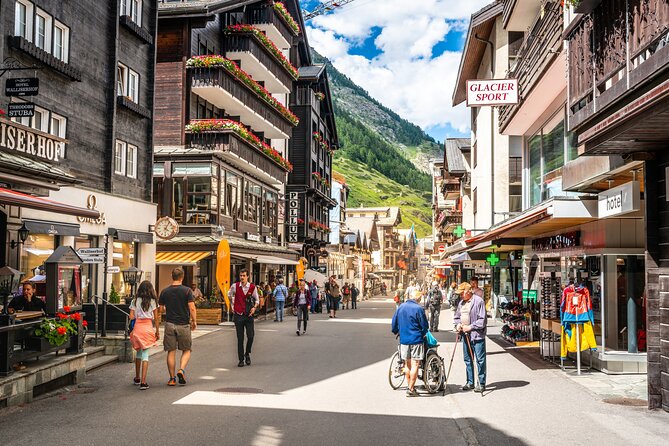
Zermatt can feel like a launchpad for mountain adventures. Cable cars, railway lines, ski equipment, and Matterhorn views dominate the first impression. This tour asks you to pause and look at the village as a place shaped by faith, farming, mountaineering, and loss.
That change of pace is the tour’s real purpose. You are not simply ticking off viewpoints. You are moving through the streets with someone who can explain why the village developed as it did and how alpinists helped turn a remote mountain community into an international destination.
The private setup matters here. With only your own group, you can stop to ask about a church detail, a family name in the cemetery, or the old buildings along Hinterdorfstrasse. You are not working around strangers or waiting for a guide to answer a dozen unrelated questions.
The route also gives you a useful first look at central Zermatt. The starting point is Pfarrkirche St. Mauritius, and the final stop is Gornergrat Railway at Bahnhofplatz 1. If you are planning to ride the railway later, finishing there can help you find the station and understand how it fits into your day.
A few more Zermatt trips to weigh up
- Zürich Historic District Tour
★ 5.0 · 206 reviews - Basel Historical Old Town Tour
★ 4.0 · 99 reviews - Highlights of Geneva: Dark History Quest Experience
★ 4.0 · 16 reviews
St. Mauritius Church: start with Zermatt’s quiet side
The walk begins at Pfarrkirche St. Mauritius, on Kirchplatz. You have about 20 minutes here, and admission is free.
This is a sensible starting point because it shifts your attention away from the Matterhorn and toward Zermatt’s spiritual life. The church offers historic architecture and a calm interior, giving your guide room to explain the role of faith in the village without the noise of a major attraction.
You should not expect a long formal church tour. The stop is brief, and the value comes from context. Ask your guide what the church has meant to local people and how religious buildings fit into the older village center.
If churches are not your main interest, this may feel like a slow opening. I still like it as a reset. Zermatt is easy to experience as a collection of shops and mountain services, and the church reminds you that daily life here existed long before modern tourism.
Matterhorn Museum: a short look at the mountain story
The next stop is the Matterhorn Museum, also called Zermatlantis. The planned visit lasts about 10 minutes and is an outside visit, with no admission ticket listed.
That distinction matters. This tour does not promise a full museum entry or a detailed look at every display. Instead, your guide uses the museum as a point of reference while explaining Zermatt’s past and the way the Matterhorn became central to the region’s identity.
The museum is especially useful if you have not yet learned the basic story of Zermatt’s development. The guide can connect the village you are seeing today with the mountain culture that grew around it. The focus includes the development of the Matterhorn Mountains and the people who came to climb them.
Ten minutes is enough for an introduction, not a museum visit. If you want exhibits, objects, and a slower look at the subject, you may need to return on your own. The private tour gives you the framework, then lets you decide how far you want to go.
Mountaineers’ Cemetery: the most meaningful stop
The Mountaineers’ Cemetery receives about 20 minutes, and it is likely to be the most memorable part of the walk.
This is a solemn place honoring climbers who died in the mountains. It is not a dramatic attraction, and it should not be treated like one. The point is to pause, read the names, and consider the courage and danger behind Zermatt’s mountaineering story.
I appreciate that the tour includes this stop rather than presenting the Matterhorn only as a beautiful backdrop. The mountain has inspired generations of climbers, but it has also taken lives. The cemetery gives the story weight.
Your guide’s role matters most here. Elizabeth has been praised for her calm, friendly manner and for explaining the history of local people and alpinists with care. Mike has also been praised for combining history with an easy, personal style. Guide assignments can vary, but those details suggest the experience works best when the person leading it treats the cemetery as a place of remembrance, not just another photo stop.
Give yourself room for a quiet moment. You do not need to rush through this part of the tour.
Same mountains, a completely different kind of day:
- Private Ski Lessons – 3 hours Zermatt
★ 5.0 · 279 reviews - Matterhorn Paragliding flight in Zermatt (20-25min)
★ 5.0 · 207 reviews - FLYMATTERHORN VIP Paragliding from Zermatt, With Matterhorn View
★ 5.0 · 192 reviews - 20 to 25 Minute Tandem Paragliding in Zermatt and Matterhorn View
★ 5.0 · 40 reviews
Kirchbrücke: the best place for a village view
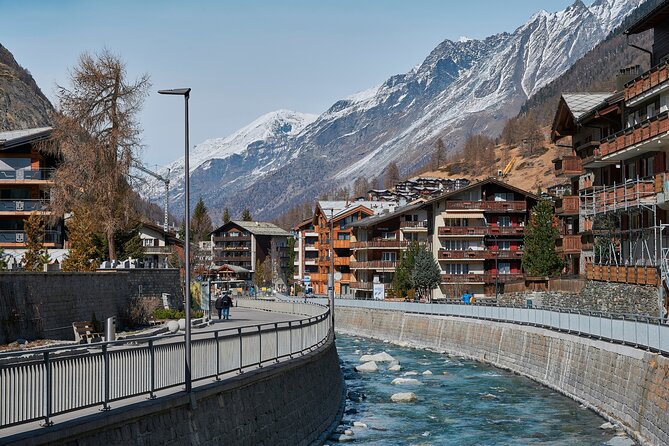
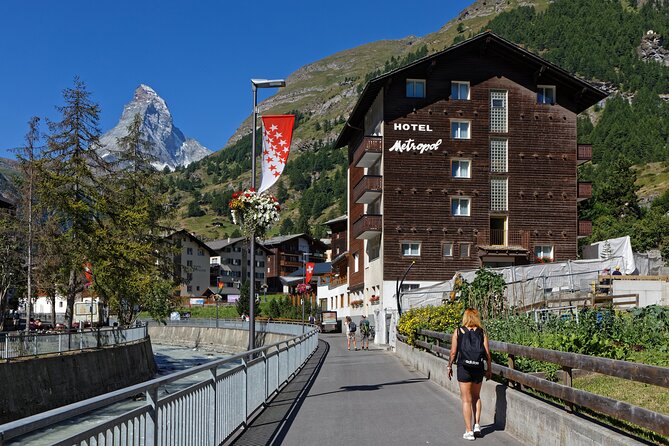
Kirchbrücke is scheduled for about 20 minutes. The bridge provides views across Zermatt and toward the surrounding peaks, making it the natural photography stop on the route.
This is where the tour’s cultural story meets the mountain scenery. From the bridge, you can connect the older village streets with the high peaks beyond them. The view helps explain why Zermatt became so important to mountaineers and sightseers alike.
Bring your camera, but also listen before you start snapping. A guide can point out what you are seeing and explain how the village sits within its mountain setting. The view may change with weather and visibility, so do not judge the tour solely by whether the Matterhorn appears perfectly clear.
The stop is also a useful break after the cemetery. You move from reflection back into the open air, with time to enjoy Zermatt at a slower pace.
Hinterdorfstrasse: old barns in the middle of town

Hinterdorfstrasse is one of the strongest stops for anyone interested in everyday Alpine life. You spend about 20 minutes walking through the historic heart of Zermatt, where old barns and granaries preserve the look of an earlier farming community.
These buildings are valuable because they show how people lived and worked, not just how visitors later came to admire the mountains. The weathered timber structures offer a more grounded view of Zermatt than the polished tourist streets nearby.
Look closely at the construction and the way the buildings sit along the lane. Your guide can help you understand what these barns and granaries were used for and why they remain important to the village’s character.
This is also one of the easiest sections to explore independently. You can walk the lane without paying an admission fee, take photographs, and return later. The advantage of having a guide is not access. It is interpretation.
If your main goal is a long mountain hike, this stop may seem less urgent. If you want to understand Zermatt beyond skiing, cable cars, and souvenir shops, it is one of the most worthwhile parts of the route.
St. Peter’s Chapel: a small pause for local art

Kirche St. Peter’s, described as a charming chapel with beautiful frescoes, receives about 20 minutes.
The intimate setting gives the tour another change of scale. After the open bridge and the long view toward the peaks, you step into a smaller place where local religious art becomes the focus. The frescoes provide something to study at close range, and the chapel offers a quiet corner for reflection.
Because the chapel is small, the guide’s explanation can make a real difference. You can ask about the frescoes, the chapel’s role, and how it relates to St. Mauritius Church. The tour does not promise a detailed art lecture, but it gives you enough time to look carefully rather than simply passing by.
This stop will appeal most to people who enjoy churches, art, and older village traditions. If you prefer outdoor scenery only, it may feel less compelling than Kirchbrücke.
Ending at Gornergrat Railway
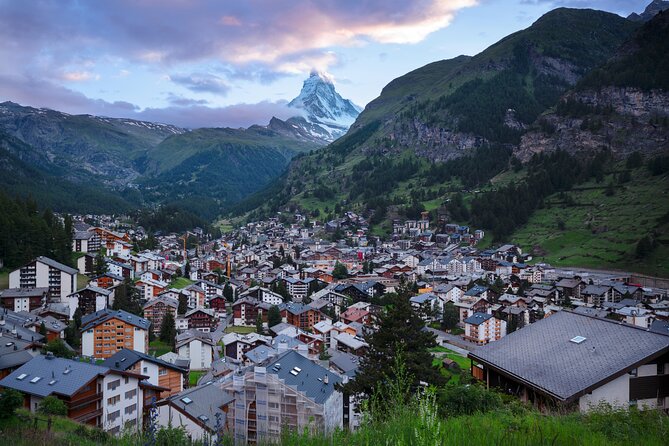
The final stop is Gornergrat Railway, with about 10 minutes devoted to the station and the railway experience.
The description presents this as a place where panoramic views of the Matterhorn and nearby peaks await. It is important to be clear about what the tour includes: the walk ends at the railway station, but the tour information does not state that a train ride or railway ticket is included.
That makes the ending practical. You can finish the walking tour and continue with your own plans from Bahnhofplatz. If you already intend to visit Gornergrat, the guide can help place the railway within Zermatt’s larger mountain story. If you have not planned a ride, you still finish near a major transport point rather than being left at an unrelated street corner.
Ten minutes is a brief introduction. It is not enough for the full railway journey, and the great views depend on weather and visibility. Treat this stop as a convenient finish and orientation, not as a complete Gornergrat excursion.
The guide makes or breaks this experience
A two-hour private tour depends heavily on the person leading it. The strongest parts of the experience are likely to be the stories, explanations, and local suggestions rather than exclusive access to the sights.
Mike has been praised for an engaging personality, clear stories, and useful recommendations for dining and shopping. That combination is valuable because it keeps the tour connected to the rest of your stay. You can ask where to eat after the walk or which streets are worth revisiting.
Elizabeth has been described as calm, warm, friendly, and engaging, with a strong grasp of Zermatt’s history, local people, and alpinists. That style sounds particularly well suited to the cemetery and church stops, where a measured pace is better than a loud, theatrical presentation.
The two guides offer a useful clue about what to look for. This is not mainly a tour for fast sightseeing. It is best when the guide encourages questions and gives meaning to places you could otherwise pass without noticing.
The experience is offered in German, French, English, and Italian. The booking information also lists English as the offered language, so check your preferred language when reserving.
Is $499 per person a fair price?
At $499 per person, this is expensive for a two-hour walk. The attractions themselves list no admission charges, and several stops are public streets, churches, a bridge, and a cemetery. You are paying for private guiding, not entry fees.
That can still be worthwhile for a couple, family, or small group that values personal attention. If your group is large enough to receive a discount, the cost may make more sense, though the exact discount is not specified. The private format lets you ask questions, set the tone, and avoid a crowded group tour.
For a solo visitor or someone watching every franc, the value is harder to defend. You could walk through central Zermatt independently, visit the bridge and old street, and use the two-hour period to explore at your own pace. The strongest reason to book is the guide’s local explanation, especially if you want the stories of the alpinists and the development of the Matterhorn culture.
I would think of this as a specialist introduction, not a bargain orientation walk.
Who should book this Zermatt tour?
I would recommend it most strongly to:
- First-time visitors who want a clear introduction to Zermatt’s past
- People interested in mountaineering and the history of the Matterhorn
- Families or small groups who prefer a private guide
- Visitors who enjoy churches, old buildings, and local stories
- Anyone planning to use Gornergrat Railway and wanting to end near the station
- Visitors who want restaurant and shopping suggestions from a local guide
I would be more cautious if you have only a short time in Zermatt and want mountain transport, hiking, or a full museum visit. The route is compact and focused on the village center. It will not replace a Gornergrat train journey, a mountain excursion, or a long walk into the surrounding countryside.
The route is near public transportation, and most people can participate. Since the tour is a walking experience through central Zermatt, wear comfortable shoes and leave room in your schedule for the route to feel unhurried.
Booking, timing, and cancellation details
The tour lasts approximately two hours, with the stated time divided among seven stops. It begins at Pfarrkirche St. Mauritius, Kirchplatz, 3920 Zermatt, and ends at Gornergrat Railway, Bahnhofplatz 1, 3920 Zermatt.
Confirmation is provided when you book. The experience is private, so only your group participates. Free cancellation is available if you cancel at least 24 hours before the start time. Cancellations or changes made within 24 hours are not accepted for a refund, and the cut-off follows local Zermatt time.
The tour is booked an average of 31 days ahead, which suggests that planning early is sensible, especially if you need a particular language or date.
Should you book it?
Book this tour if you want Zermatt explained through its churches, old barns, alpinists, and village streets, and if the private guide is worth more to you than admission tickets or a long mountain outing. The Mountaineers’ Cemetery and Hinterdorfstrasse give the walk more substance than a simple photo tour, while the finish at Gornergrat Railway is useful for a larger day plan.
Skip it if $499 per person feels too steep for a compact route you can mostly walk on your own. In that case, visit the public sights independently and spend your budget on a mountain railway or another experience with included transport.
For history-minded visitors, families, and small groups who want personal attention, this is a thoughtful introduction to Zermatt. For scenery-first visitors, it is best treated as a village prelude, not the main mountain event.
FAQ
Where does the tour begin?
The tour begins at Pfarrkirche St. Mauritius, Kirchplatz, 3920 Zermatt, Switzerland.
Where does the tour end?
The tour ends at Gornergrat Railway, Bahnhofplatz 1, 3920 Zermatt, Switzerland.
How long does the tour last?
The tour lasts approximately two hours.
Is this a private tour?
Yes. Only your group participates in the experience.
What languages are available?
The experience is offered in German, French, English, and Italian. The booking information also lists English as an offered language.
Does the tour include admission tickets?
The listed stops show no admission charge. The Matterhorn Museum is an outside visit, and the information does not state that a Gornergrat train ride is included.
Does the tour visit the Mountaineers’ Cemetery?
Yes. The tour allows about 20 minutes at the cemetery, which honors people who died while venturing into the mountains.
Does the tour visit the Matterhorn Museum?
Yes, but the stop is an outside visit lasting about 10 minutes.
Is the tour near public transportation?
Yes. The tour starts near public transportation and ends at Gornergrat Railway.
Can I cancel for a full refund?
Yes, if you cancel at least 24 hours before the experience start time. Cancellations or changes made less than 24 hours before the start time are not accepted for a refund.
Just added around Zermatt
- Zermatt’s Alpine Charms – Private Guided Village Tour★ 5.0 · 6 reviews
- Matterhorn Private Skiing Day Zermatt★ 5.0 · 9 reviews
- Zermatt Guided Day Hike★ 5.0 · 6 reviews
- Private Mt. Gornergrat and Zermatt Tour★ 5.0 · 15 reviews
- Zermatt Village Walk and Mt. Gornergrat Private Day Trip★ 4.5 · 12 reviews
- Private Snowboarding Lessons – 3 Hours Zermatt★ 5.0 · 9 reviews
- Klein Matterhorn and glacier trail private full day hike★ 5.0 · 7 reviews
- Full Day 5 Hours★ 5.0 · 11 reviews
Historical Tours, compared.
Highlights of Geneva: Dark History Quest Experience
Read our review →
Historic Lausanne: Exclusive Private Tour with a Local Expert
Read our review →Browse the lists this tour appears in