
Reviewed · HISTORICAL TOURS
Historic Lausanne: Exclusive Private Tour with a Local Expert
Lausanne’s old center is best understood on foot, where a steep staircase, a medieval castle, and a Gothic cathedral reveal more than a quick pass through town. This private two-hour walk links the city’s major sights with quieter corners, and the route can adjust to your pace and interests. I especially like the private format and the chance to hear local stories rather than follow a fixed script.
I also like that the walk includes both famous landmarks and everyday Lausanne, from the Escaliers du Marché to Rue de Bourg and Montbenon. The cathedral visit can be a highlight, and guide Thomas has even timed tours so participants heard organs playing in two churches. The main caution is practical: one booking had a no-show guide, so confirm the meeting details before setting out, even though the overall rating is 4.2 from five ratings.
In This Review
- Key points at a glance
- Why this two-hour walk works in Lausanne
- Beginning at Bessières Bridge
- Lausanne Cathedral and the medieval center
- Château Saint-Maire and Lausanne’s political past
- Palais de Rumine at Place de la Riponne
- Escaliers du Marché, the old-town shortcut
- Rue de Bourg and the city’s everyday side
- Montbenon for open views and a pause
- Finishing at Musée de l’Elysée
- What the private format adds
- Is $211.21 per person a fair price?
- Who should book this Lausanne walk?
- FAQ
- How long does the Historic Lausanne private tour last?
- Where does the tour begin?
- Where does the tour end?
- Is this a private experience?
- Which sights are included?
- Are entry tickets included?
- Is the tour suitable for people with impaired mobility?
- Can I cancel for a full refund?
- Is the tour close to public transportation?
- Should you book it?
Key points at a glance
- Private attention: Only your group takes part, so you can ask questions and adjust the pace.
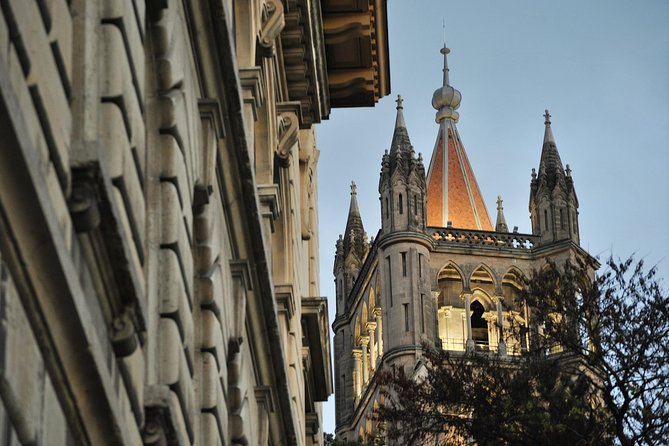
- A strong old-town route: Bessières Bridge, Lausanne Cathedral, Château Saint-Maire, and the Escaliers du Marché give you a clear sense of the city’s past.
- More than medieval sights: Palais de Rumine, Rue de Bourg, Montbenon, and Musée de l’Elysée add culture, shopping, public space, and photography.
- A useful local touch: The guide provides personal tips and can adapt the route to your interests.
- Good for a short stay: The two-hour length fits neatly into a day of sightseeing.
- Plan for walking: Lausanne is hilly, and this experience is not recommended for people with impaired mobility.
Why this two-hour walk works in Lausanne
Lausanne can feel confusing at first. The city rises sharply from the lake area toward the cathedral, and its neighborhoods are connected by bridges, stairways, roads, and public squares rather than by one simple old-town loop.
That is where a private walking tour earns its keep. You do not just collect a series of photo stops. You move between parts of the city that show how Lausanne developed, from religious and medieval power to museums, shopping streets, and public institutions.
The two-hour length is sensible. You get enough time to see the city’s main historic core without giving up an entire morning or afternoon. You should still expect a brisk outing, especially if you stop for questions, photographs, and views. The guide can adapt the pace, but the route covers several areas and includes uphill sections and stairs.
The private setup matters most if you want context. You can ask why a building matters, how Lausanne’s neighborhoods connect, or where to return later. A shared group tour may cost less, but this experience gives you control over the conversation and the walking speed.
A few more Lausanne trips to weigh up
- Zürich Historic District Tour
★ 5.0 · 206 reviews - Basel Historical Old Town Tour
★ 4.0 · 99 reviews - Highlights of Geneva: Dark History Quest Experience
★ 4.0 · 16 reviews
Beginning at Bessières Bridge
The tour starts at Bessières Bridge, or Pont Charles Bessières, at 1003 Lausanne. This is a smart meeting point because it gives you an immediate sense of Lausanne’s shape.
From the bridge, you can see how the city joins different neighborhoods across its steep terrain. The view is not simply a scenic opening. It helps explain why bridges and stairways matter so much here. Lausanne is not a flat old town where every sight sits on one level, and this first stop prepares you for the walking ahead.
You should arrive with comfortable shoes and a little spare time. The meeting point is near public transportation, but the experience itself does not include transportation tickets. If you need to reach the bridge by bus or another service, that cost is yours.
Because the tour is private, this is a good place to ask the guide for a quick orientation. You can find out where the cathedral sits, how far you will walk, and which sections may be adjusted if the weather changes.
Lausanne Cathedral and the medieval center
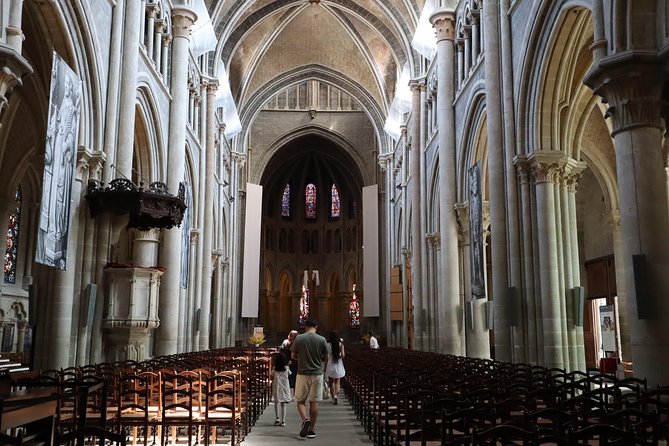
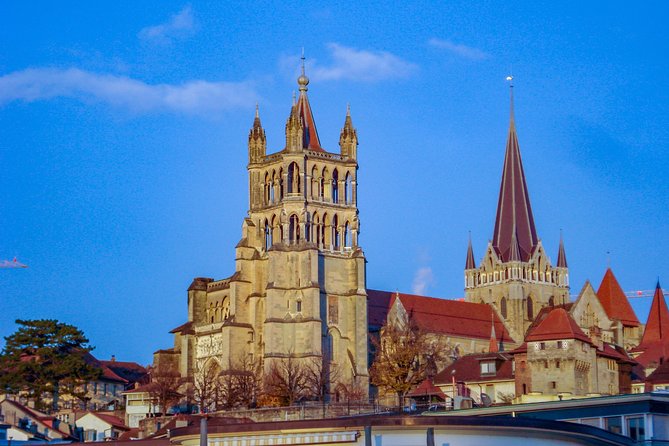
Lausanne Cathedral is the centerpiece of the historic route. It is a major religious and civic landmark, and its Gothic design gives the walk a strong visual focus.
The cathedral is also where the tour’s local storytelling can become most useful. A quick visit can leave you admiring the stonework without understanding its place in the city. A local guide can point out why the building matters and connect it to the streets and institutions around it.
Allow yourself a quiet moment inside. One of the strongest details from this experience is the chance to hear an organ playing in two churches during a tour with Thomas. That kind of moment cannot be guaranteed, but it shows the value of keeping the schedule flexible and paying attention to what is happening around you.
The cathedral is a working religious site, not just a monument. Conditions inside may affect how long you stay or what you can see. The tour price does not include entrance tickets for museums or monuments, so ask the guide what is included before paying for any admission.
Château Saint-Maire and Lausanne’s political past
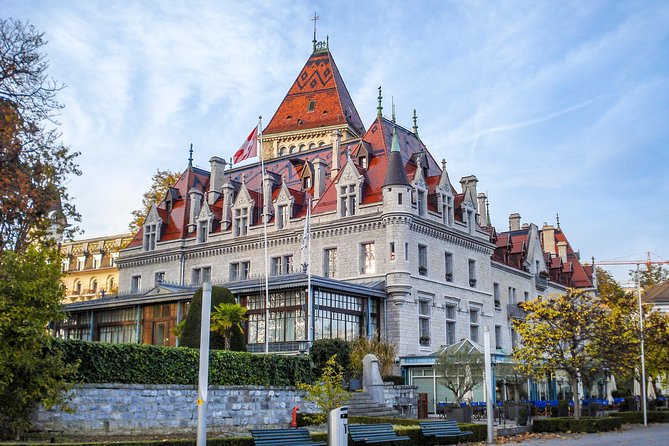
Château Saint-Maire, on Rue de la Barre, shifts the story from religion to government. This substantial medieval building once served as a residence for bishops and now functions as a government site.
That change tells you something important about Lausanne. The city’s old buildings are not all frozen in the past. Some continue to serve public purposes, while others now house museums or cultural institutions. Seeing the château after the cathedral helps you understand how religious authority and civic power once overlapped.
You may not enter every building on the route. The château is presented as a historic exterior and government site, and admission to monuments is not included. Even so, it earns its place because it helps connect the city’s architecture with its past political role.
This is also a useful point to ask for local recommendations. A private guide can spend more time on subjects that interest you, such as architecture, local government, church history, or the daily life of the old center.
Same mountains, a completely different kind of day:
- The Olympic Museum Entrance Ticket in Lausanne
★ 4.5 · 211 reviews - Vine Stories: Lavaux & Lutry wine walk
★ 5.0 · 67 reviews - Riviera Col du Pillon & Glacier 3000 from Lausanne
★ 5.0 · 32 reviews - (KTL352) – Gruyeres Day Trip with Chocolate Factory from Lausanne
★ 4.0 · 17 reviews
Palais de Rumine at Place de la Riponne
The Palais de Rumine adds a different note to the tour. Located on Place de la Riponne, this grand building houses several important museums and reflects Lausanne’s long interest in education and culture.
After the medieval cathedral and château, the Palais de Rumine shows a city that also looks toward public learning. Its setting on Place de la Riponne gives you a wider urban view, with more room and movement than the narrow old streets.
If you are interested in museums, note that the walking tour does not include museum entry. You can use the guide’s advice to decide if one of the museums deserves a return visit. That is one of the practical benefits of taking this walk early in your stay: you can identify the places worth exploring in more detail later.
The square itself also helps break up the walking. The route is not only a series of façades. You move through larger public spaces, then return to narrow historic routes. That contrast makes Lausanne easier to read.
Escaliers du Marché, the old-town shortcut
The Escaliers du Marché is one of the most memorable parts of the route. This historic staircase links the city center with the cathedral, and its traditional character makes it feel more intimate than a broad street or formal square.
The stairs are also a clear reminder that Lausanne is hilly. They are useful as a connection between neighborhoods, but they can be tiring if you have mobility limitations. The experience is not recommended for people with impaired mobility, and that warning matters here.
For most walkers, the staircase adds character rather than difficulty. It gives the tour a more local rhythm, with a route shaped by the city’s terrain instead of by modern traffic. You will want shoes with a firm grip, especially if the weather is wet.
The private format helps on this section. Your guide can pause when needed, explain the buildings along the way, or alter the pace. A fixed large-group schedule would give you less freedom on stairs and inclines.
Rue de Bourg and the city’s everyday side
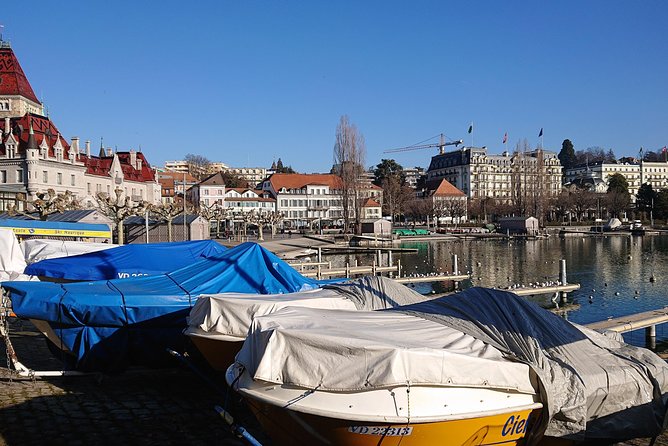
Rue de Bourg brings you into Lausanne’s shopping center. Its historic buildings and active street life show how the old city continues to function as part of modern Lausanne.
This is a valuable stop because it keeps the tour from becoming a parade of grand monuments. You see where people shop, meet, and move through the city today. The street also helps explain urban development, with older architecture adapted to present-day use.
Do not expect a long shopping session during a two-hour tour. The point is to understand the street and its place in the city. If you see a shop or café worth returning to, make a note of it and come back after the walk.
A local guide’s tips can be especially useful here. The tour includes personal recommendations, and you can steer the conversation toward food, shopping, museums, or neighborhoods to explore on your own.
Montbenon for open views and a pause
Esplanade de Montbenon, on Allée Ernest-Ansermet, gives the tour a more open finish before the final stop. This public space offers views across Lausanne and shows how the city combines formal urban areas with open green space.
The change of mood is welcome. After the cathedral, castle, museum building, stairway, and shopping street, Montbenon gives you room to look back at the city as a whole. It is a good place to pause and ask the guide to connect the different parts of the route.
Weather can affect this stop more than the indoor or built-up sections. The route may change according to conditions, and the guide can adjust the experience around rain or other problems. The tour is still a walking activity, so bring clothing suited to the forecast.
Montbenon is also a useful orientation point for the rest of your visit. You can ask about the route toward the station, the old center, or other parts of Lausanne. The guide’s local advice may be as useful as the formal sightseeing.
Finishing at Musée de l’Elysée
The walk ends at Musée de l’Elysée, at Place de la Gare 17. This photography museum brings the experience into Lausanne’s modern artistic life.
Ending at a photography museum gives the route a clear arc. You begin with a bridge and medieval streets, pass through religious and civic landmarks, and finish with visual art. The museum’s location near the station is practical if you are leaving Lausanne or continuing by public transportation.
Entry is not included, so treat the museum as a possible final visit rather than a guaranteed part of the tour. If photography interests you, you may want to stay longer after the guide finishes. If not, the location still makes a convenient end point.
The stated finish is near Place de la Gare, and the guide’s final recommendations can help you decide what to do next. The tour ends as Lausanne opens up for your own exploration, rather than returning you to the starting bridge.
What the private format adds
This is an exclusive private tour, meaning only your group takes part. That changes the experience in several useful ways.
You can ask for more detail at the cathedral, spend less time on shopping, or focus on architecture and local culture. You can also tell the guide if you need a slower pace. The route adapts to your interests and walking speed, although it still involves hills and stairs.
The guide is an independent local, not a large museum operation or a standard coach-tour narrator. That can lead to a more personal exchange. The strongest examples from the available feedback point to enthusiastic guiding, local insight, and unexpected church music. Thomas is specifically praised for a pleasant Old Town tour that included organ music in two churches.
At the same time, private guiding depends heavily on the assigned person. Most of the feedback is positive, but one booking involved a guide who did not appear at the meeting point. That is a serious service problem, even if it appears isolated in the small sample. Confirm the time and meeting location shortly before departure, and keep the provider’s contact information available.
Is $211.21 per person a fair price?
At $211.21 per person, this is not a budget walk. The value depends on how many people are in your private group and how much you want from a guide.
For one or two people, the cost is significant for a two-hour experience. For a larger group, the private format may make more sense, especially since group discounts are available. You are paying for a local guide, a tailored route, and exclusive attention rather than for admissions or transportation.
The experience is most worthwhile if you want orientation and conversation. If you only need a map of the main sights, you can see several of these places independently for less. If you want the city’s parts explained as you move between them, the private guide offers something a self-guided walk cannot easily provide.
Remember that museum, monument, and transportation tickets are extra. Build those costs into your plan if you want to enter the cathedral, Palais de Rumine museums, Musée de l’Elysée, or other sites along the way.
Who should book this Lausanne walk?
I would recommend it to first-time visitors who want a compact introduction to Lausanne’s historic center. It also suits couples, families, and small groups who prefer asking questions without waiting for a large group to catch up.
It works well early in a stay because the route gives you useful bearings and points out places you may want to revisit. Culture-minded visitors should appreciate the connection between the cathedral, Palais de Rumine, and Musée de l’Elysée.
I would be more cautious if you have impaired mobility or dislike steep streets and stairs. I would also avoid booking it as your only activity if you want long museum visits, since the two-hour walk mainly provides an introduction and outside context.
The overall rating of 4.2 from five ratings suggests a generally positive experience, but the small number of ratings does not offer a broad performance record. The strong praise centers on the cathedral, the guide’s personal insight, Old Town, and special church music. The no-show complaint is the one practical warning worth taking seriously.
FAQ
How long does the Historic Lausanne private tour last?
The tour lasts approximately two hours.
Where does the tour begin?
It begins at Bessières Bridge, also called Pont Charles Bessières, at 1003 Lausanne, Switzerland.
Where does the tour end?
The tour ends at Musée de l’Elysée, Place de la Gare 17, 1003 Lausanne.
Is this a private experience?
Yes. Only your group participates, and the route is tailored to your interests and walking pace.
Which sights are included?
The route includes Bessières Bridge, Lausanne Cathedral, Château Saint-Maire, Palais de Rumine, Escaliers du Marché, Rue de Bourg, Esplanade de Montbenon, and Musée de l’Elysée. Stops may vary with weather and your interests.
Are entry tickets included?
No. Transportation, museum, and monument entry tickets are not included in the tour price.
Is the tour suitable for people with impaired mobility?
It is not recommended for guests with impaired mobility because the route includes walking through hilly Lausanne and historic stairs.
Can I cancel for a full refund?
Yes. You can cancel up to 24 hours before the experience start time for a full refund. Cancellations or changes made less than 24 hours before the start time are not accepted for a refund.
Is the tour close to public transportation?
Yes. The meeting point is near public transportation, but transportation tickets are not included.
Should you book it?
Book this walk if you want Lausanne explained by a local in a short, private session, especially if the cathedral, Old Town architecture, and cultural institutions interest you. The flexible route, personal attention, and chance for memorable moments such as church organ music give it more value than a basic list of photo stops.
Skip it if you want a low-cost self-guided walk, extensive indoor sightseeing, or an easy route without hills and stairs. If you do book, confirm the guide and meeting point before departure, then arrive ready to walk, listen, and ask for the local tips that make a private tour worthwhile.
Just added around Lausanne
- (KTL303) – Winter Tour Montreux and Chaplin’s World from Lausanne★ 5.0 · 7 reviews
- Winter Gruyères, chocolate & cheese tour from Lausanne★ 4.5 · 10 reviews
- Lausanne (City Center) Scavenger Hunt and Sights Self-Guided Tour★ 4.5 · 14 reviews
- Panoramic Wine Tour From Lausanne★ 5.0 · 8 reviews
- Discover Lausanne’s most Photogenic Spots with a Local★ 5.0 · 9 reviews
- (KTL364) – Small group tour Jungfrau and Interlaken from Lausanne★ 4.5 · 9 reviews
- Taste Lausanne – A Full Swiss Food Tour by Do Eat Better★ 5.0 · 14 reviews
- Lausanne Foxtrail Citi★ 4.5 · 7 reviews
Historical Tours, compared.
Highlights of Geneva: Dark History Quest Experience
Read our review →
Private Mystic Zermatt Tour: Peaks, History & Culture
Read our review →Browse the lists this tour appears in