
Reviewed · WALKING TOURS
Zermatt Village Walk and Mt. Gornergrat Private Day Trip
Gornergrat is the star here. The 35-minute cog railway ride carries you high above Zermatt to 3,135 meters, where the Matterhorn faces you across a world of glaciers and snowy peaks. The private format also gives you room to set the pace and ask questions.
I like the combination of old Zermatt on foot and the mountain railway, since you get more than a quick photo stop. I also like the included rail fare and hotel or station pickup, which removes some of the planning work. The drawback is the price: at $644.42 per person, this is costly if your main goal is simply to ride the train.
In This Review
- Key points
- Zermatt and Gornergrat in one well-planned day
- Old Zermatt, wooden houses, and narrow lanes
- Kirchbrücke viewpoint and the classic Matterhorn frame
- Mountaineers’ Cemetery and the cost of climbing
- Hotel Monte Rosa and the first Matterhorn ascent
- Riding the Gornergrat Railway to 3,135 meters
- Gornergrat’s view of the Matterhorn and glaciers
- What the private format adds
- Is $644.42 per person a fair price?
- Who should book this Zermatt day trip?
- Should you book it?
- FAQ
- Where does the tour start?
- Where does the tour end?
- How long does the experience last?
- Is this a private tour?
- What language is offered?
- Is the Gornergrat Railway ticket included?
- What can you see in old Zermatt?
- How high is Gornergrat?
- Are food and drinks included?
- What happens if the weather is poor?
Key points
- A private six-hour outing with an English-speaking local guide for your party only.
- Old Zermatt away from the main street, including wooden houses and narrow lanes.
- Kirchbrücke viewpoint, one of the classic places to frame the Matterhorn above the village.
- Mountaineers’ Cemetery and Hotel Monte Rosa, where the story of the Matterhorn’s first ascent comes into focus.
- Gornergrat at 3,135 meters, with views toward the Matterhorn, Monte Rosa, Liskamm, and more than 20 peaks above 4,000 meters.
- Pickup and drop-off included at a local hotel or the Zermatt railway station.
Zermatt and Gornergrat in one well-planned day
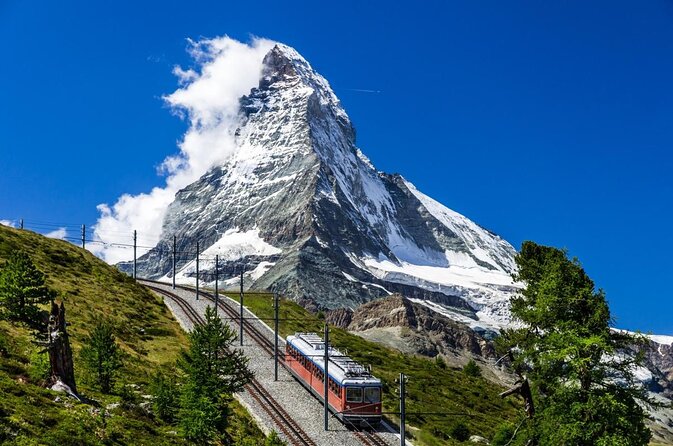
This private day trip pairs two very different sides of Zermatt. First, you walk through the village with a guide. Then you board the Gornergrat Railway for a high mountain viewpoint that reaches roughly 10,285 feet.
That pairing makes good sense. Zermatt is more than a base for mountain lifts, yet the village can be easy to rush through. Its old wooden houses, small lanes, memorials, and mountaineering stories make more sense when someone points out what you are seeing. Gornergrat then supplies the big Alpine panorama.
The outing lasts about six hours and starts at 10:30 a.m. You receive pickup at your hotel or the Zermatt train station, and the tour ends at one of those same locations. Since this is a private activity, only your party participates. That matters most if you want to stop for photographs, ask plenty of questions, or avoid the fixed rhythm of a large group.
The tour is offered in English. Guides named in past tour details include Tony and Remi. Tony was praised for meeting his party at the hotel and explaining Zermatt’s development before the train ride. Remi was noted for adding personal insight about mountain life and the area. Your assigned guide may differ, but these examples show the kind of personal service the experience aims to provide.
A few more Zermatt trips to weigh up
- Zermatt 2-Hour Small Group Village Walk
★ 5.0 · 11 reviews - Zermatt Village Walk and Glacier Paradise Private Day Trip
★ 5.0 · 4 reviews - Zurich Walking Tour With Cruise and Aerial Cable Car
★ 5.0 · 669 reviews
Old Zermatt, wooden houses, and narrow lanes
The walking portion begins in the older part of Zermatt, away from the main shopping street. You pass typical wooden houses and use the village’s narrower alleyways, which offer a better sense of its traditional character than a straight walk through the center.
Zermatt is car-free, so walking is the natural way to see it. You will not need a bus transfer between village sights, and the route is intended to cover the main points efficiently. The guide can explain how the settlement developed and help connect the modern resort town with its earlier life as a mountain community.
I like this opening because it gives the mountain a human setting. Before you see the Matterhorn from a high ridge, you see the streets used by climbers, hotel workers, residents, and visitors. You also get a chance to orient yourself, which is useful if you are staying in Zermatt for more than one day.
The limitation is that the village portion is not an all-day historical tour. About two hours are allocated to Zermatt, and the walk is focused on the old area, key viewpoints, and mountaineering history. If you want museums, extensive shopping time, or a long stop at a café, you may need to do those separately.
Kirchbrücke viewpoint and the classic Matterhorn frame
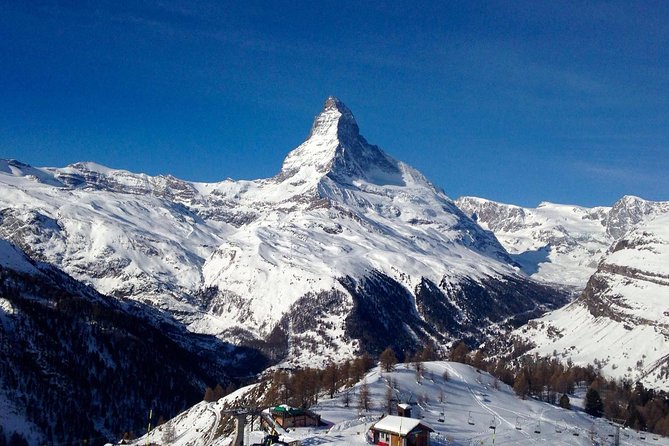
A short stop at the Kirchbrücke bridge provides the familiar Zermatt view: village rooftops below and the Matterhorn rising behind them. The stop lasts about 10 minutes, so it is mainly for photographs and orientation rather than a long pause.
This is one reason a guide can help. The best view depends on where you stand and what you want in the frame. You can photograph the mountain alone, or include the old village and the bridge to show how dramatically the peak rises above Zermatt.
Keep your expectations realistic. Mountain weather changes, and the Matterhorn may be partly hidden. The tour requires good weather, and poor conditions can lead to a new date or a full refund, but even a clear day does not guarantee a completely cloudless summit. The guide can still make the village walk worthwhile if the mountain view is not perfect.
Mountaineers’ Cemetery and the cost of climbing
The Mountaineers’ Cemetery is a quiet and sobering stop. Its graves recall the dangers of climbing the Matterhorn and other high Alpine peaks. The visit takes about 10 minutes, but the subject gives the walking tour weight.
This is not just a scenic outing. Zermatt’s identity is closely tied to mountaineering, and the cemetery makes that history personal. The first successful Matterhorn ascent in 1865 ended in tragedy when four members of the descending party died. The nearby Hotel Monte Rosa is linked to the beginning of that expedition, so the guide can explain both its ambition and its terrible outcome.
For me, this is one of the more meaningful parts of the tour. The Matterhorn can look like a perfect postcard from Kirchbrücke or Gornergrat. The cemetery reminds you that the peak is also a serious climb, not simply a backdrop for photographs.
The stop is brief, and visitors who want a detailed account of Alpine climbing history may want to ask questions as they walk. A private guide gives you a better chance to do that than a large scheduled group.
Same mountains, a completely different kind of day:
- Private Ski Lessons – 3 hours Zermatt
★ 5.0 · 279 reviews - Matterhorn Paragliding flight in Zermatt (20-25min)
★ 5.0 · 207 reviews - FLYMATTERHORN VIP Paragliding from Zermatt, With Matterhorn View
★ 5.0 · 192 reviews - 20 to 25 Minute Tandem Paragliding in Zermatt and Matterhorn View
★ 5.0 · 40 reviews
Hotel Monte Rosa and the first Matterhorn ascent
The Hotel Monte Rosa is included as a historical point along the walk. It is identified with the start of the first ascent of the Matterhorn, making it a useful place to connect Zermatt’s hotels and streets with the development of mountaineering.
The value here comes from context. Without the story, the hotel is simply another old building in a famous resort. With the story, you can picture Zermatt in the period when climbers arrived with heavier equipment, fewer route markers, and far less certainty about what awaited them above.
The guide’s role is important at this point. A strong explanation can turn a short exterior stop into a memorable part of the day. Tony was specifically praised for explaining the town’s history and development, while Remi was praised for sharing personal observations about mountain life. Those details are the sort of thing you should ask for if the walking portion feels too brief.
Riding the Gornergrat Railway to 3,135 meters
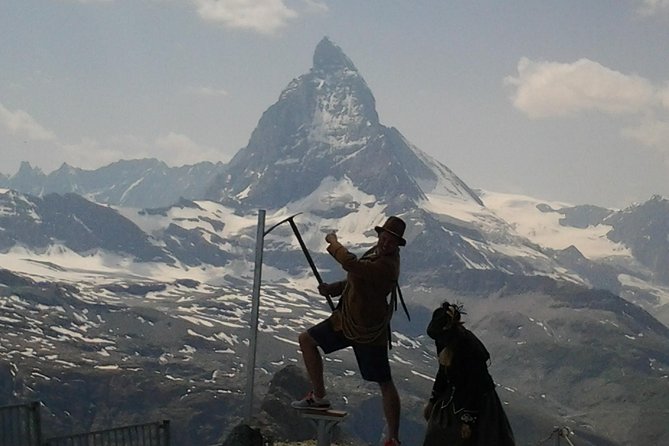
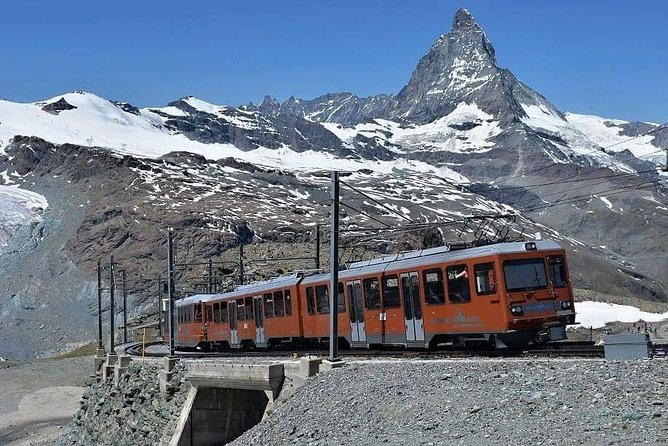
After the village walk, you board the Gornergrat cog railway. The climb from Zermatt to the ridge takes about 30 to 35 minutes, and the rail fare is included in the tour price.
The train is not just transport. As it rises, the view opens across the high Alpine world. You are heading from the village at about 1,620 meters to a ridge more than 1,500 meters higher. The change in altitude is a major part of the experience, so take the ride at an easy pace and pay attention to how quickly the setting changes.
Gornergrat is the highest cog railway in Europe, according to the tour information. At the top, you reach 3,135 meters, or about 10,285 feet. The air is crisp, and snow remains in the area year-round. Conditions can feel very different from those in the village, so a warm layer is practical even on a mild day below.
The journey is included, but you should not mistake that for skip-the-line access to the train itself. The stated benefit is that you do not need to buy the entrance or railway tickets separately. Your guide handles the transportation plan, which saves time and reduces the chance of choosing the wrong ticket.
Gornergrat’s view of the Matterhorn and glaciers
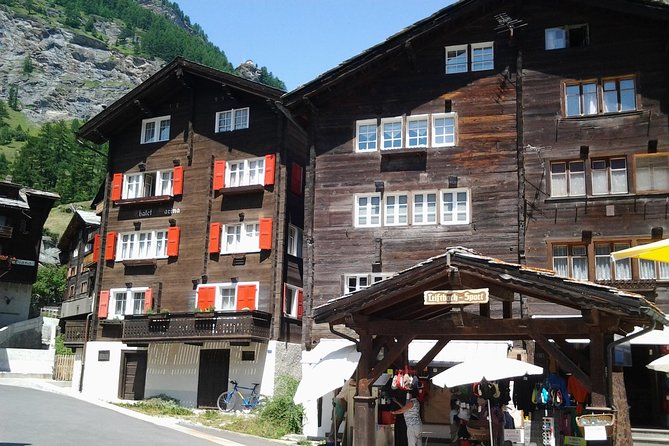
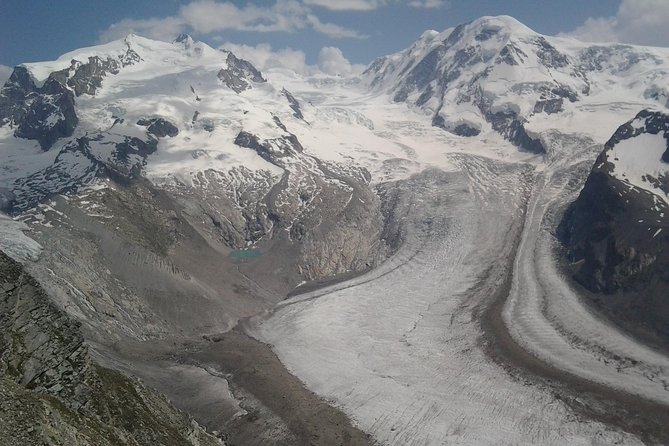
At Gornergrat, you have about two hours to enjoy the ridge and its viewpoints. The main reward is the direct view toward the Matterhorn, with glaciers and other high peaks spreading across the horizon.
From this position, you can look toward Monte Rosa, Liskamm, and more than 20 peaks above 4,000 meters. The Gorner Glacier and Findel Glacier are part of the surrounding mountain scene. The setting is broad and open, so this is the place for the large-scale Alpine photographs that Zermatt’s lower streets cannot provide.
The official details refer to the Gornergrat terminus and the Kulmhotel, the high mountain hotel at the ridge. There is also a multimedia experience that presents the Matterhorn and its surrounding mountain world, which can be useful if clouds reduce the outdoor views.
Two hours is a sensible amount of time. You can take photographs, listen to the guide’s explanation of the surrounding peaks, and pause without feeling hurried. If the weather is clear, the time may pass quickly. If clouds move in, the multimedia display gives you something else to see, though it cannot replace the full panorama.
At this altitude, you should avoid planning the stop around strenuous activity. The tour is primarily a viewpoint visit, not a mountain hike. Most people can participate, but you should consider how you handle high elevations and tell the guide if you need a slower pace.
What the private format adds
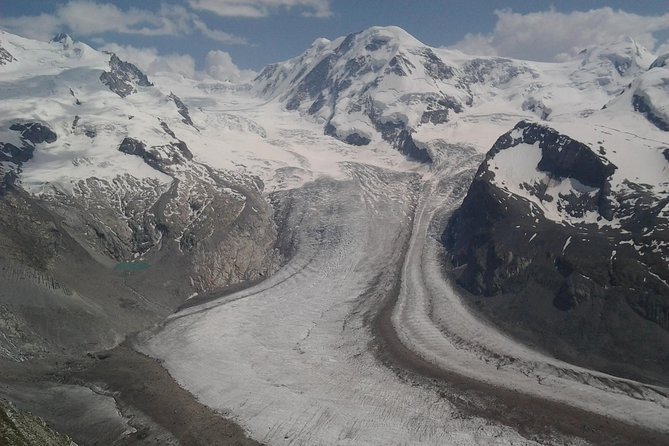
The private arrangement is the main difference between this outing and simply buying a Gornergrat ticket yourself. Your guide meets you at a local hotel or the station, leads the village walk, explains the sites, arranges the railway portion, and returns you to your hotel or the station.
That can be valuable on a first visit. One past account specifically praised the way the guide knew where and when to move through the sights. In a small village with a major mountain railway, efficient timing can keep the day calm.
You also have more control. If your group wants extra explanation at the cemetery, more photographs at Kirchbrücke, or a slower walk through the old lanes, you can ask. A private tour is especially useful for families, couples, and small groups who do not want to fit into someone else’s pace.
Still, the private format does not automatically guarantee a perfect guiding experience. One dissatisfied account found the guide’s explanations too limited and felt that the sights were easy to reach without help. That criticism is fair to consider. Zermatt is walkable, the Gornergrat Railway is straightforward to use, and independent visitors can arrange this combination themselves.
The tour earns its price only if you value interpretation, local context, and a well-managed day. When booking, it is reasonable to ask how much time will be devoted to the village and what style of guiding you prefer. That simple conversation may help match expectations.
Is $644.42 per person a fair price?
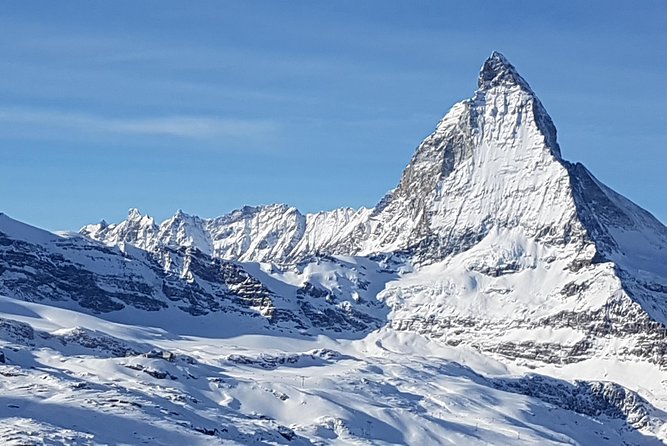
At $644.42 per person, this is a premium outing. The fee includes taxes, handling charges, all transportation fees, the private local guide, the village walk, and the Gornergrat Railway transportation. Food, drinks, and personal purchases are not included.
To judge the value, compare it with what you would otherwise arrange. You would need to find the train station, choose and buy the correct rail tickets, plan the mountain timing, and decide which parts of Zermatt deserve your limited time. You would also miss the historical explanations unless you used a guidebook or hired another guide.
For a group of two or more people who place a high value on convenience and private service, the cost may be justified. The private guide is the central product, not just the mountain ride. Group discounts are offered, though the exact reduction is not stated, so larger parties should check the final price before booking.
For an independent-minded visitor who only wants the Gornergrat view, the price is harder to defend. The railway is accessible, and the village sights are close together. You might save a substantial amount by arranging the train and exploring Zermatt on your own.
The strongest case for booking is a short stay, a first visit, or a group that wants one person to connect the village, Matterhorn history, and high mountain view. The weakest case is a repeat visit or a traveler who enjoys planning rail trips and reading about local history independently.
Who should book this Zermatt day trip?
I would recommend it most to first-time visitors who have about half a day and want both the town and Gornergrat without sorting out every detail. It also suits families and small groups who value pickup, a private pace, and direct help from an English-speaking guide.
Photographers should like the route because it offers several different Matterhorn settings: old wooden houses, the Kirchbrücke village view, and the high ridge at Gornergrat. History-minded visitors will appreciate the cemetery and Hotel Monte Rosa, provided they ask the guide to explain the first ascent in detail.
The tour is less suited to budget-conscious visitors, independent hikers, or anyone who wants a full day on the mountain. It is also not the right choice if you expect meals, long shopping stops, or a demanding hike, since none of those are part of the stated program.
The experience has a 4.6 rating, with 92 percent of customers recommending it, and the strongest praise centers on the guides, particularly Tony and Remi. The one negative account is a useful warning: the private price creates high expectations, so the guide’s contribution needs to matter to you.
Book at least 24 hours before the 10:30 a.m. start if you want the option of a full refund. Changes or cancellations made inside that period are not accepted for a refund. Children must be with an adult, service animals are allowed, and the tour is near public transportation.
Should you book it?
Book this tour if you want a private, guided introduction to Zermatt and consider the Gornergrat train ride the centerpiece of a carefully organized half-day. The combination of old village lanes, mountaineering stories, and views from 3,135 meters gives you a clear sense of both Zermatt’s past and its mountain setting.
Skip it if you mainly want the railway ticket and a viewpoint. You can reach the village sights and train station independently, and $644.42 per person is a steep premium for convenience alone.
For most first-time visitors with limited time, I see the appeal. Just remember what you are paying for: personal guiding and planning, not food or a private mountain vehicle. If that distinction fits your priorities, this is a polished way to meet Zermatt and the Matterhorn in the same morning and afternoon.
FAQ
Where does the tour start?
Pickup is offered at a local hotel or the Zermatt railway station. The listed start time is 10:30 a.m.
Where does the tour end?
Drop-off is provided at your hotel or the Zermatt railway station.
How long does the experience last?
The tour lasts approximately six hours.
Is this a private tour?
Yes. Only your party participates in the activity.
What language is offered?
The tour is offered in English.
Is the Gornergrat Railway ticket included?
Yes. Transportation fees and the Gornergrat Railway transportation fee are included.
What can you see in old Zermatt?
The walk includes traditional wooden houses, narrow village lanes, the downtown shopping street area, the Mountaineers’ Cemetery, and the Hotel Monte Rosa.
How high is Gornergrat?
Gornergrat is at 3,135 meters above sea level, or approximately 10,285 feet.
Are food and drinks included?
No. Food, drinks, and personal expenses are not included.
What happens if the weather is poor?
The experience requires good weather. If it is canceled because of poor weather, you will be offered a different date or a full refund.
Just added around Zermatt
- Zermatt’s Alpine Charms – Private Guided Village Tour★ 5.0 · 6 reviews
- Private Mystic Zermatt Tour: Peaks, History & Culture★ 4.5 · 6 reviews
- Matterhorn Private Skiing Day Zermatt★ 5.0 · 9 reviews
- Zermatt Guided Day Hike★ 5.0 · 6 reviews
- Private Mt. Gornergrat and Zermatt Tour★ 5.0 · 15 reviews
- Private Snowboarding Lessons – 3 Hours Zermatt★ 5.0 · 9 reviews
- Klein Matterhorn and glacier trail private full day hike★ 5.0 · 7 reviews
- Full Day 5 Hours★ 5.0 · 11 reviews
Walking Tours, compared.
Zurich Walking Tour With Cruise and Aerial Cable Car
Read our review →
Lucerne Walking & Boat Tour: The Best Swiss Experience
Read our review →
3 in 1: Zurich Walking Tour – Cruise on the Lake – Cable Car Ride to Felsenegg
Read our review →
Glacier 3000 Ticket Including Cable Car and Peak Walk by Tissot
Read our review →

Bern Walking Tour: Explore Top Sights & Hidden Gems
Read our review →Browse the lists this tour appears in