
Reviewed · WORKSHOPS
À Maurice Watch Workshop in Zurich
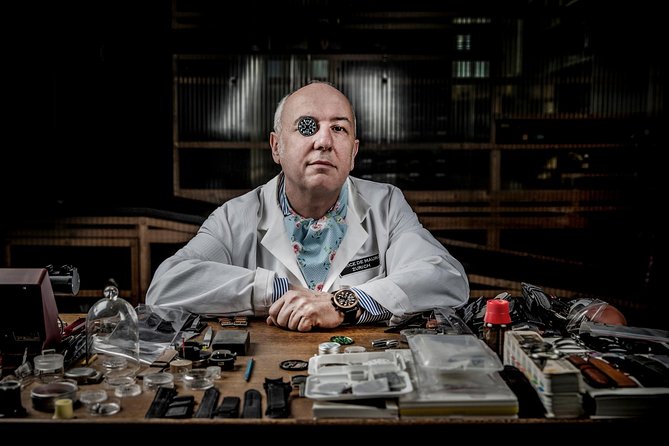
A mechanical watch looks simple until you see the tiny parts that make it tick. At the Maurice de Mauriac atelier in Zurich, you learn how those parts work, then assemble them yourself under a professional watchmaker’s watchful eye. It is a rare hands-on Swiss watchmaking experience, not a showroom visit.
I like the generous time spent at the workbench, and I like the relaxed family setting created by Daniel, Leonard, and Massimo Dreifuss. Watchmaker Arlene takes the technical work step by step, and you get to wear a traditional watchmaker’s outfit and magnifying loupe for photos. The main consideration is the price, about $434.75 per person, which is high for a two-hour activity.
In This Review
- Key points
- Inside Maurice de Mauriac’s Zurich atelier
- The brand story before the workbench
- Arlene’s lesson in mechanical watchmaking
- Your turn to assemble the watch
- The watchmaker’s coat and magnifying loupe
- Why the private format matters
- What the $434.75 price includes
- Who will enjoy this most
- Timing, transport, and useful planning details
- How this compares with a normal watch-shop visit
- Is the Maurice de Mauriac watch workshop worth booking?
- FAQ
- Where does the Maurice de Mauriac watch workshop start?
- Where does the activity end?
- How long does the workshop last?
- Is the workshop offered in English?
- Is this a private activity?
- Can children participate?
- What happens if I need to cancel?
Key points
- You assemble a mechanical watch: The watchmaker explains each part before you try putting it back together yourself.
- The setting is a working Zurich atelier: You visit Maurice de Mauriac’s own workshop at Tödistrasse 48, rather than a large museum or factory.
- The Dreifuss family introduces the brand: Daniel, Leonard, and Massimo share the story behind this Zurich watch company.
- You dress like a watchmaker: A traditional coat and magnifying glass make the workshop both practical and photo-friendly.
- The experience is private: Only your own group participates, with a professional guide and refreshments included.
- The value depends on your interest: It is costly, but the price covers personal instruction, a private setting, drinks, snacks, and a take-home gift.
Inside Maurice de Mauriac’s Zurich atelier
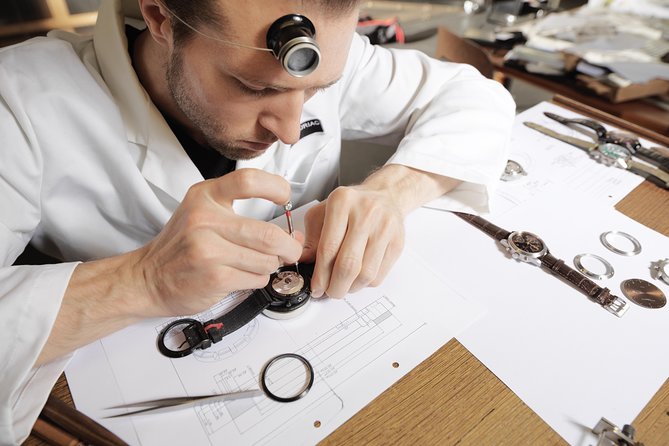
Your visit begins at Tödistrasse 48 in Zurich, where the Maurice de Mauriac atelier occupies a central city location. The experience starts and ends here, so you do not need to arrange transport between separate stops.
The mood is more personal than polished. The atelier is presented as an eclectic, comfortable place with a home-like feel, while still carrying the style you expect from a Swiss watch brand. That matters because the workshop is not only about machinery. You are also getting a look at how a small, independent watch company presents its work and personality.
The Dreifuss family welcomes you at the start. Daniel, Leonard, and Massimo explain how the Maurice de Mauriac brand began and how the family developed its own approach to watch design and production. If you care about independent brands, this part gives the technical session a useful frame. You are not simply handling a random movement. You are learning inside the home of a Zurich watchmaker.
Allow roughly 15 to 30 minutes for this opening introduction. The total activity is listed as about one to two hours, with the main plan taking around two hours. If your schedule is tight, treat it as a two-hour appointment rather than a quick stop.
A few more Zurich trips to weigh up
- Private Ski Lessons – 3 hours Zermatt
★ 5.0 · 279 reviews - Private Ski and Snowboard Lessons – 3 hours Verbier
★ 5.0 · 46 reviews - HALF DAY 3-Hour Private Ski Lessons in Zermatt, Switzerland
★ 5.0 · 38 reviews
The brand story before the workbench
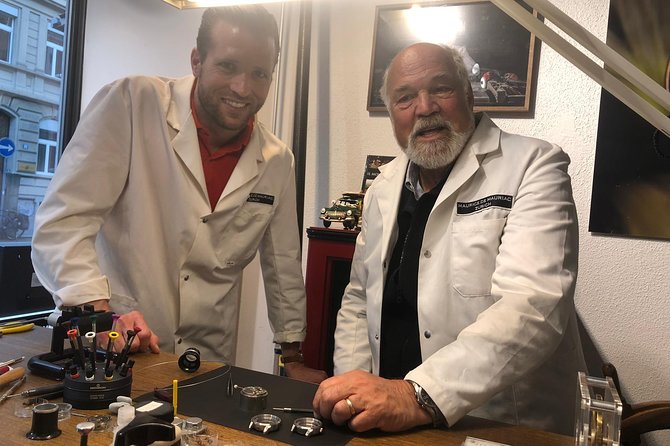
The opening talk covers the Maurice de Mauriac story from its beginning, followed by an introduction to the Swiss watch industry. You learn how Swiss watchmaking developed and how the company works within that tradition.
This section is useful because it gives you a sense of place. Zurich is not only a base for banks, museums, and lake views. It also has a modern watchmaking scene, and Maurice de Mauriac presents its work from that local point of view. The focus is on how the company produces its own style of watches, not on a broad museum lecture packed with dates.
I would expect this opening portion to appeal most to people who want the story behind a product. If you only want to sit down and handle watch parts, the introduction may feel like a slower start. Still, it helps you understand why mechanical watches remain important and why a small atelier can offer something different from a standard retail visit.
The family-led format also gives the activity a social side. The atmosphere is described as welcoming, unpretentious, and comfortable, so this should feel less formal than a factory tour. That can be a real advantage if you are new to watches and worry that the subject will seem too technical.
Arlene’s lesson in mechanical watchmaking
The central part of the visit takes place at the workbench with a professional watchmaker. Arlene explains how a mechanical watch works and shows you the individual pieces as she takes a watch apart.
This is where the experience earns its place on a Zurich schedule. You are not just told that a mechanical watch contains many small components. You see those pieces, follow the order in which they fit together, and learn how the mechanism depends on careful placement.
Arlene’s method is especially important for beginners. The watch is disassembled while she identifies each part and explains its role. Then you take your turn putting it back together, with her supervising the process and offering practical tips. The instruction is hands-on, but you are not left alone with delicate equipment.
That balance makes the class approachable. Mechanical watchmaking can seem intimidating because the parts are small and the work requires patience. Having a watchmaker beside you means you can ask questions as you go and correct mistakes before they become a problem.
You should not expect to leave as a trained watchmaker after one session. The value is in understanding the basic construction and experiencing the care required to handle a mechanical movement. Even if you forget some of the technical names later, you will look at a traditional watch differently after seeing what happens beneath the dial.
Your turn to assemble the watch
After the demonstration, you take over the work. The main task is assembling parts of the mechanical watch with the watchmaker overseeing each stage.
This is the part I would prioritize when comparing this activity with a regular watch museum or brand presentation. A museum can show you beautiful timepieces behind glass, but here your hands become part of the lesson. You gain a direct sense of scale, precision, and patience.
The session is designed for participation rather than speed. You have time to work through the steps, and the watchmaker gives expert help when needed. Photos are allowed throughout the experience, so you can document the workbench, the watchmaking tools, and your own progress.
The small parts may be challenging. That is not a flaw, but you should know what you are signing up for. If you prefer a passive demonstration, this may feel demanding. If you enjoy crafts and careful work, the challenge is the point.
The class also gives you a better understanding of why mechanical watches cost more than their appearance might suggest. The finished object may fit on your wrist, but the process depends on fine movements, close attention, and a sequence that cannot be rushed.
Same mountains, a completely different kind of day:
- Mount Titlis and Lucerne Day Trip from Zurich
★ 4.5 · 1,960 reviews - Heidiland and Liechtenstein Tour from Zurich
★ 4.0 · 1,745 reviews - Jungfraujoch: Top of Europe Day Trip from Zurich
★ 4.5 · 1,647 reviews - Jungfraujoch Day Trip from Zurich: Swiss Alps & Bernese Oberland
★ 4.5 · 1,409 reviews
The watchmaker’s coat and magnifying loupe
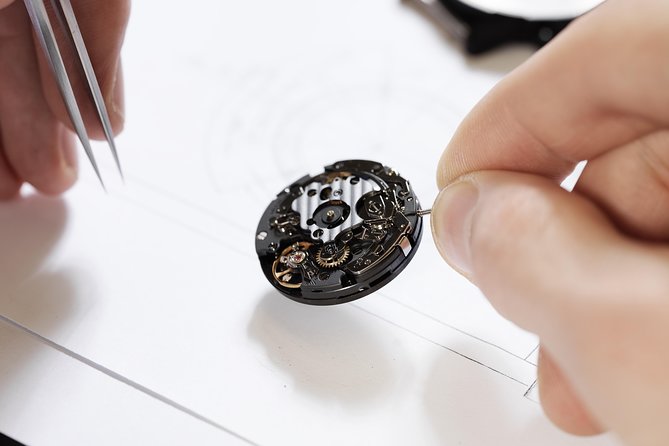
At some point during the practical session, you wear an original watchmaker’s outfit and use a magnifying watch glass. This is more than a costume photo opportunity, although it certainly makes for memorable pictures.
The coat and loupe help you understand the physical side of the job. A watchmaker works close to the movement, with the eyes and hands focused on tiny details. Using the magnifying glass gives you a small taste of that concentration.
Photos are allowed for the full activity, which is helpful if you want a record of the experience rather than only a souvenir from the end. The outfit also makes this a good choice for families, couples, or friends looking for an unusual shared activity in Zurich. Children must be accompanied by an adult, and most participants can take part.
The setting sounds relaxed enough for photos without making the whole session feel staged. You are still there to learn and work, but the pictures add a playful touch to a very technical subject.
Why the private format matters
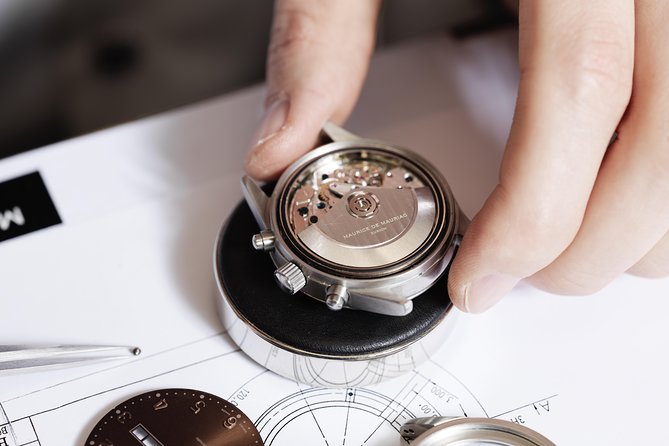
This is a private activity, so only your group participates. That is one of the strongest practical features.
A private group means the watchmaker can focus on your pace. If you need a second explanation, you can ask for it. If one person in your group is already interested in watch movements while another is starting from zero, the instructor can respond to both without a large class moving on.
The format also suits a special occasion. You might book it for a birthday, anniversary, family outing, or a day when you want to spend time together rather than simply moving from sight to sight. Group discounts are available, which may improve the value for a larger party.
The tradeoff is that the published cost is per person, and the starting price is substantial. A private workshop cannot compete with the price of a public museum ticket. You are paying for personal instruction, access to a working atelier, the practical session, refreshments, and the small gift at the end.
What the $434.75 price includes
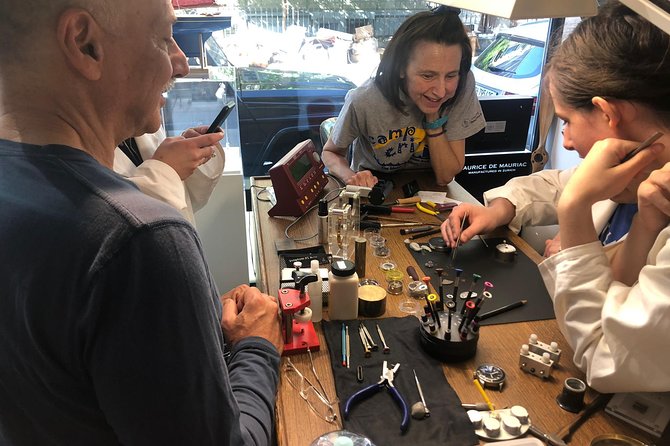
At about $434.75 per person, this is a premium Zurich activity. I would not recommend booking it as a casual filler between major sights. The price makes sense only if you place real value on watchmaking, private instruction, and a personal encounter with a small Swiss brand.
Several inclusions soften the cost:
- A local and professional guide
- Private participation for your group
- Coffee or tea
- Other beverages
- Bottled water
- Snacks
- A keepsake gift
- Admission to the workshop
The refreshments are a pleasant extra, but they are not the reason to book. The main value comes from the time at the workbench and the direct guidance from the watchmaker.
The gift at the end gives you something tangible to remember the workshop. The available information does not specify what the gift is, so do not book expecting a watch or a valuable piece of equipment. The experience itself is the main purchase.
One practical cost is not included: parking. If you drive, the parking fee is payable at check-in. Since the workshop is near public transportation, using transit may be the simpler choice, although the exact route is not specified.
Who will enjoy this most
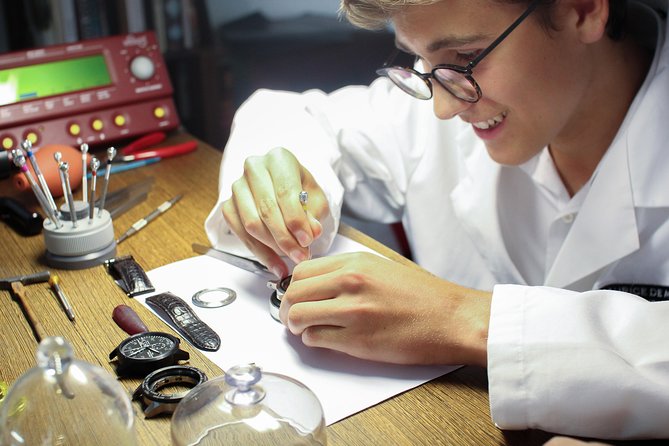
I would recommend this workshop to you if you have an interest in:
- Mechanical watches and how they work
- Small independent brands
- Traditional crafts
- Private classes with direct instruction
- Unusual activities beyond Zurich’s standard sights
- Taking photos during a hands-on experience
It also suits couples and families who want a shared activity with a clear beginning and end. The private format helps groups of mixed ages and experience levels feel comfortable.
You do not need to be a watch collector. The explanation begins with the basics, and the instructor guides you through the assembly. In fact, someone who knows little about watches may get the most from the session because each part is introduced in context.
I would hesitate to recommend it if you dislike slow, precise work or if your Zurich budget is tight. Two hours at this price is a serious investment. You might find better value elsewhere if your main goal is simply to see Swiss watches or buy one.
One point from the experience is worth keeping in mind: a previous participant bought a Maurice de Mauriac watch after the workshop because the brand story and personal connection made the purchase more meaningful. You are not required to buy anything, but the setting naturally encourages interest in the company’s watches.
Timing, transport, and useful planning details
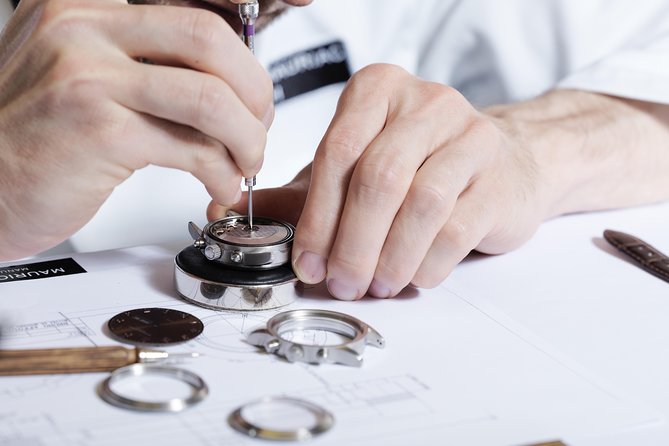
The meeting point is Tödistrasse 48, 8002 Zürich, Switzerland. The activity ends at the same location.
Confirmation is provided when you book, and the experience is offered in English. A multilingual guide may operate the activity, so you can check the language arrangement when making your reservation if that matters to your group.
The activity is near public transportation. Most people can participate, and service animals are allowed. Children need to be accompanied by an adult.
This is not an open-ended drop-in visit. It is a scheduled private appointment, so plan to arrive ready to begin at the stated meeting time. With the introduction taking 15 to 30 minutes and the practical section forming the main part, allow a full two hours in your day.
The experience is often booked about 48 days ahead. That does not guarantee that every date sells out, but it does suggest that you should reserve early if your Zurich dates are fixed, especially if you need a particular group size or time.
Free cancellation is available up to 24 hours before the start time for a full refund. Changes or cancellations made less than 24 hours before the start time are not accepted for a refund, and the cut-off uses local Zurich time.
How this compares with a normal watch-shop visit
A shop visit lets you browse finished watches and perhaps speak with a salesperson. This workshop gives you time with the mechanism itself.
That difference matters. The opening story explains the company, but the workbench session gives you the strongest connection to the craft. You learn through action, not only through display cases or sales talk.
The atelier setting also makes the visit feel more personal. The Dreifuss family is part of the experience, and the workshop presents the company as a working Zurich brand with its own style. If you like meeting the people behind a product, this is a better choice than a standard retail stop.
On the other hand, a shop visit is quicker and costs less. You can fit it into a busy day without setting aside two hours. You may also prefer a museum if you want to see a wide range of historic watches rather than focus on one company and one mechanical movement.
The right choice depends on your interest. This workshop is for participation and connection. It is not the most efficient way to get a broad survey of Swiss watchmaking.
Is the Maurice de Mauriac watch workshop worth booking?
Book it if you want a private, personal experience with a real craft at its center. The best features are the direct instruction from a professional watchmaker, the chance to assemble the mechanism yourself, and the warm involvement of the Dreifuss family.
I especially like that much of the time is devoted to hands-on work. You are not rushed through a short demonstration before being sent back into the city. You also get photos, refreshments, and a keepsake, which add value without distracting from the main lesson.
Skip it if you want a low-cost attraction, a broad museum visit, or a quick introduction to Swiss watches. The $434.75 price is hard to justify unless you care about the personal workshop format.
For watch fans, craft-minded visitors, and anyone seeking a memorable two-hour activity in Zurich, this is a strong choice. For everyone else, compare the cost with your other priorities before booking.
FAQ
Where does the Maurice de Mauriac watch workshop start?
The workshop starts at the Maurice de Mauriac atelier at Tödistrasse 48, 8002 Zürich, Switzerland.
Where does the activity end?
The activity ends back at the same meeting point, the Maurice de Mauriac atelier.
How long does the workshop last?
The experience lasts approximately one to two hours. The opening brand and Swiss watch industry introduction takes about 15 to 30 minutes, followed by the practical watchmaking session.
Is the workshop offered in English?
Yes. The experience is offered in English. A multilingual guide may operate the activity.
Is this a private activity?
Yes. Only your own group participates in the private tour or activity.
Can children participate?
Yes, but children must be accompanied by an adult. Most people can participate.
What happens if I need to cancel?
You can cancel up to 24 hours before the local start time for a full refund. Cancellations or changes made less than 24 hours before the start time are not accepted for a refund.
Just added around Zurich
- Crash Landing on you Tour with Private Transportation★ 5.0 · 6 reviews
- Self-Guided Audio City Tour in Zurich★ 4.0 · 15 reviews
- Full-Day Private Zurich Sightseeing Tour and Chocolate Tasting★ 5.0 · 5 reviews
- Zürich, Lindt Chocolate, Rheinfalls and Stein am Rhein★ 5.0 · 14 reviews
- Day trip to Swiss Villages from Zurich – Small Group Tour by Car★ 5.0 · 8 reviews
- Zurich and Suroundings (Private Tour)★ 5.0 · 7 reviews
- Zürich: Private Car Tour to Rhine Falls, Titisee and Black Forest★ 3.5 · 4 reviews
- Zurich Airport Stress-Free Private Transfer★ 5.0 · 6 reviews
Workshops, compared.


HALF DAY 3-Hour Private Ski Lessons in Zermatt, Switzerland
Read our review →

Fondue Cooking Class and Cheese Workshop in Switzerland
Read our review →
Private 3-Hour Ski Lesson in Zermatt, Switzerland
Read our review →


Private Swiss Cooking Class in Kriens with a Professional Chef
Read our review →Browse the lists this tour appears in