
Reviewed · GENEVA TOURS
Alpine Tour Across Switzerland
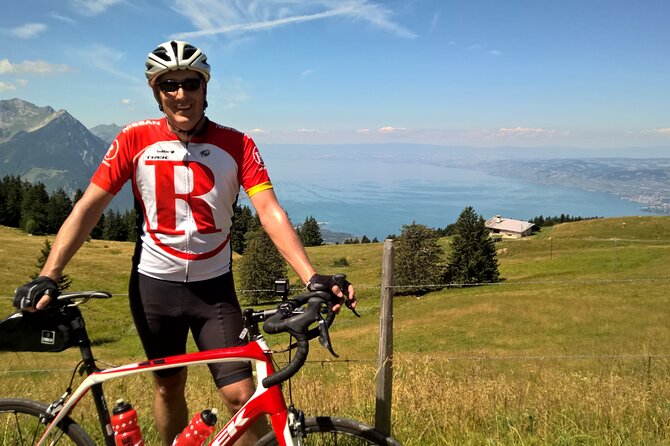
The big draw here is the route itself: 11 days by bike across Switzerland, from Geneva and Lake Geneva to Lake Constance. You cross language regions, climb major passes, roll through cheese country, and finish beside one of Europe’s largest lakes. This is a serious cycling holiday, not a sightseeing tour with a few casual rides.
I like the mix of hard alpine riding and scenic lake roads, which gives your legs a change of pace. I also like the built-in rest day in Thun and the return train ticket from Romanshorn. The catch is plain: you should be comfortable riding about 75 kilometers a day, climbing roughly 1,000 meters, and spending six to seven hours in the saddle.
In This Review
- Key details that shape the ride
- Is this an alpine cycling challenge or a sightseeing holiday?
- Geneva to Chatel, crossing Lake Geneva
- The 1,500-meter climb to Gruyères
- From Gruyères to Thun through Gantrisch
- Emmental and the quiet roads to Flühli
- Lake Sarnen and the flat roads to Beckenried
- The Klausen Pass, the tour’s hardest day
- Appenzell valleys and the final climb to Lake Constance
- Returning by train through Bern
- What the $4,596.97 price means
- Who should book this route?
- Booking, timing, and cancellation
- The final call
- FAQ
- Where does the cycling tour start?
- How long does the tour last?
- How far do I ride each day?
- How much time will I spend cycling each day?
- What is the hardest climb?
- Is there a rest day?
- How do I return after the cycling route?
Key details that shape the ride
- A true point-to-point route: You start in Geneva and finish in Romanshorn, then take a supplied train ticket back toward Geneva or another Swiss destination.
- The Klausen Pass is the toughest test: Day 8 includes about 1,600 meters of climbing in 20 kilometers, followed by a 20-kilometer descent.
- Two countries and several Swiss cultures: The route includes Chatel in France, French-speaking Switzerland, German-speaking Switzerland, and Appenzell country.
- A useful rest day in Thun: You can hike near the Swiss Alps, relax on Lake Thun or Lake Brienz, or tackle a mountain excursion.
- A small-group feel: The maximum group size is 12, though the independent format described for some bookings may suit couples or small riding groups especially well.
- Practical support from Bike Switzerland: John is noted for fast replies, careful planning, and help before, during, and after the trip.
Is this an alpine cycling challenge or a sightseeing holiday?
It is both, but the cycling comes first. The route averages about 75 kilometers per day and around 1,000 meters of climbing. Most riding days take six to seven hours, so you need strong fitness and experience with long climbs.
That workload changes how you experience Switzerland. You will not spend every afternoon wandering through museums or lingering over lunch. Instead, you will earn the views by riding through mountain passes, rolling pasture, and quiet valleys.
The reward is variety. One day brings a boat ride and a steep climb above Lake Geneva. Another gives you gentle roads through the Gantrisch Nature Park. Later, you face the Klausen Pass, then finish among the meadows and hills of Appenzell.
Bike Switzerland’s small maximum group size is useful for a route like this. A group of up to 12 can move more easily than a large cycling caravan, although the exact level of guiding and daily support should be confirmed before you pay. The information provided also points to an independent tour option, and previous bookings included a couple riding a tandem for six days. That suggests some flexibility, but you should ask how your particular package works.
Other Geneva days people book alongside this one:
- Award-Winning Geneva Chocolate &Old Town Tour with Boat Ride (3h)
★ 5.0 · 3,721 reviews - Chamonix & Mont Blanc Panoramic Sky-Glass Bus Guided Day Trip
★ 4.0 · 1,324 reviews - Annecy – Venice of the Alps – Tour from Geneva
★ 4.5 · 418 reviews
Geneva to Chatel, crossing Lake Geneva
Your first day is based in Geneva, with an overnight stay in the city. It is a sensible starting point because you can arrive, sort out your bike and gear, and prepare for the long route ahead.
On Day 2, you cruise from Geneva to Yvoire, a French village on the far side of Lake Geneva. The boat ride is more than a transfer. It gives your legs an easy opening and lets you see the lake from the water before the climbing begins.
From Yvoire, the route heads uphill to Chatel in France. You leave the lake behind and enter a more demanding mountain setting. Since you spend the night in France before returning to Switzerland, this section adds a small cross-border twist without requiring a complicated international trip.
The main thing to know is that the day is listed as about 12 hours, but that includes the full excursion window rather than 12 hours of cycling. You still need to allow plenty of time for the boat, climbing, stops, and arrival.
The 1,500-meter climb to Gruyères
Day 3 is one of the route’s major tests. You climb about 1,500 meters above Lake Geneva before reaching Gruyères, one of Switzerland’s best-known small towns.
Gruyères is a strong overnight choice because it gives the day a clear payoff. The town is famous well beyond Switzerland, yet it remains compact and atmospheric. The practical pleasure here is simple: after a big climb, you can walk a short distance, enjoy the setting, and eat fondue if the weather allows.
This is also where pacing matters. A 1,500-meter climb can make a long day feel much longer if you attack the first slopes too hard. You will want to save energy for the upper sections and for the ride into town.
Gruyères is not merely a bed for the night. It is one of the route’s cultural stops, tying the ride to Swiss cheese-making country. Still, the day will not suit a casual cyclist. You need to arrive ready for a sustained mountain effort.
From Gruyères to Thun through Gantrisch
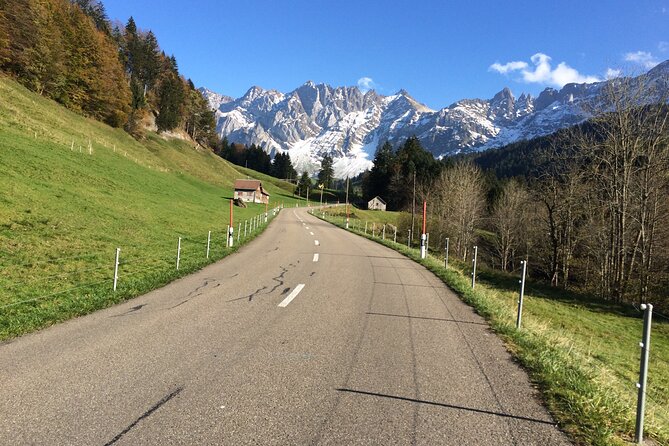
The route changes character on Day 4 as you move from French-speaking Switzerland toward the German-speaking side. Instead of another punishing pass, you ride through the Gantrisch Nature Park on gentler rolling roads.
I like this transition because it prevents the trip from becoming a parade of steep climbs. You still work all day, but the rhythm is different. Rolling terrain gives you repeated short rises and descents rather than one giant effort.
Thun is an excellent place to pause. It sits on Lake Thun and gives you access to nearby alpine excursions. Day 5 is deliberately open as a rest day, which is important after the early climbing.
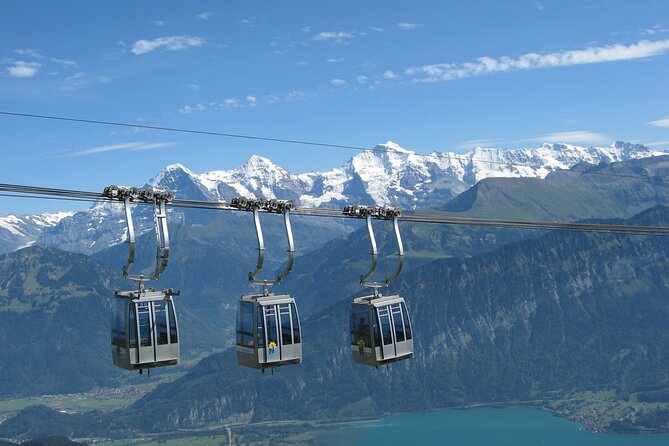
You can use that day in several ways. The options listed include hiking around the Niederhorn or Jungfrau, relaxing on Lake Thun or Lake Brienz, or simply taking a quiet day off the bike. The right choice depends on your legs. If you are carrying fatigue, do not turn the rest day into another mountain workout.
The itinerary says you may finish the ride in Thun on Day 4 and remain there for Day 5. That extra night adds value because it lets you experience a major Swiss setting instead of racing through it.
Same mountains, a completely different kind of day:
- Best of Geneva City Tour with optional boat cruise
★ 4.0 · 416 reviews - Geneva Highlights 2-Hour Introductory Tour
★ 4.0 · 322 reviews - Chamonix Mont-Blanc Full Day Guided Tour
★ 5.0 · 314 reviews - Chamonix & Mont Blanc Guided Day Trip with SkyView Panoramic bus
★ 4.5 · 310 reviews
Emmental and the quiet roads to Flühli
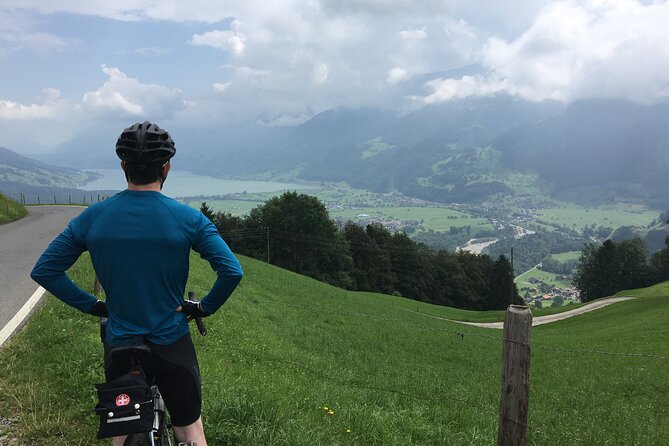
Day 6 takes you through the Swiss Alpine Panorama route and the Emmental region. This is cheese country, but the attraction is not only food. The ride uses narrow, quiet roads and takes you into a more isolated part of Switzerland.
Flühli is a small village, and the overnight stop is described as a recently renovated historic hotel. The town’s quieter setting will appeal to you if you prefer local scale over city nightlife. Above the village, you can enjoy cool-water baths, a refreshing option after a full day of riding.
This section may be one of the most authentic parts of the trip because it focuses on back roads and rural communities. There are fewer obvious headline sights, but that is the point. You get a closer look at the everyday mountain environment: pasture, farm country, and roads where the ride itself is the main event.
The drawback is that remote stops offer fewer backup choices if you arrive tired or if the weather turns poor. Your clothing, food planning, and bike condition matter more on quieter roads.
Lake Sarnen and the flat roads to Beckenried
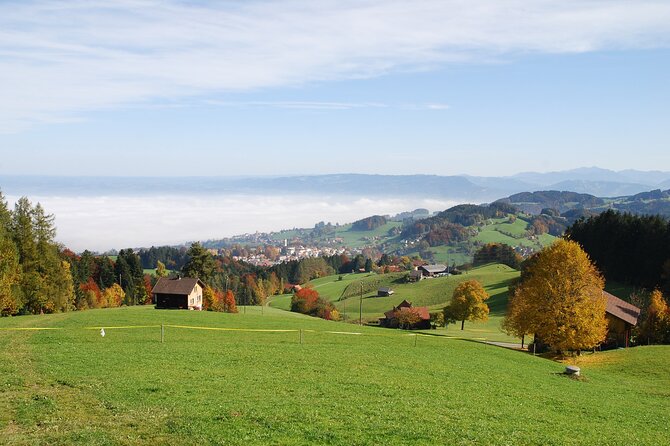
Day 7 begins with more climbing, though the route notes that you are already partway up the Glaubenbuelen Pass. Once over the pass, the reward is a long descent with views toward Lake Sarnen and beyond.
After the mountain section, the day becomes easier on the legs. You follow flatter roads beside lakes before reaching Beckenried on Lake Lucerne. This contrast is one of the route’s best design features. You get a substantial climb and descent, then several hours where you can settle into a more comfortable rhythm.
Beckenried gives you a scenic lakeside overnight stop. It also positions you for the boat ride on the following day. You should not treat this as an easy day overall, but compared with the big climbs on Days 3 and 8, it gives your body a useful break.
The Klausen Pass, the tour’s hardest day
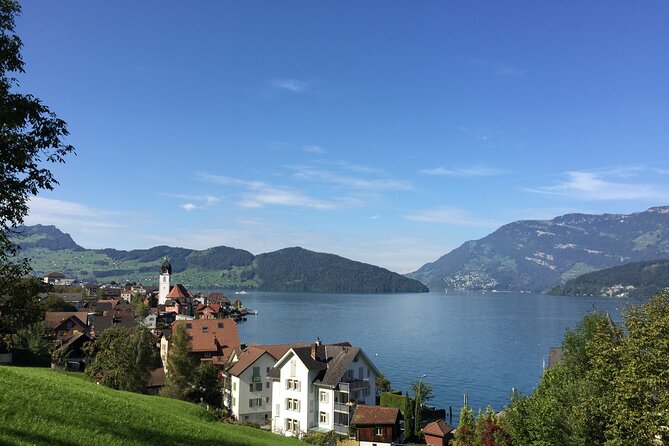
Day 8 is the day to circle on your planning calendar. You begin with a boat ride across Lake Lucerne, then continue to Altdorf, the town linked with William Tell.
From Altdorf, the road rises toward Klausen Pass. The stated climb is about 1,600 meters over 20 kilometers, followed by a 20-kilometer descent. That is a major alpine challenge, even for a strong cyclist.
The climb is not just long. It is concentrated. You gain a great deal of height in a relatively short distance, so you should expect a slow, steady effort. This is where a sensible pace, enough food, and careful attention to weather become essential.
The descent provides a well-earned release, but downhill riding after a long climb still demands concentration. You then continue toward Weesen on Lake Walensee, a small town with a peaceful lakeside setting.
The route information spells the town as Weseen in one place and Weesen in another. Use Weesen when checking maps and accommodation details. The important point is that this is the finish after the tour’s biggest mountain day.
Appenzell valleys and the final climb to Lake Constance
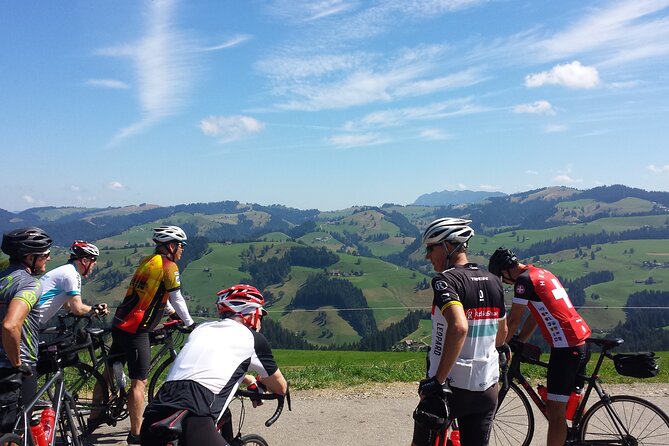
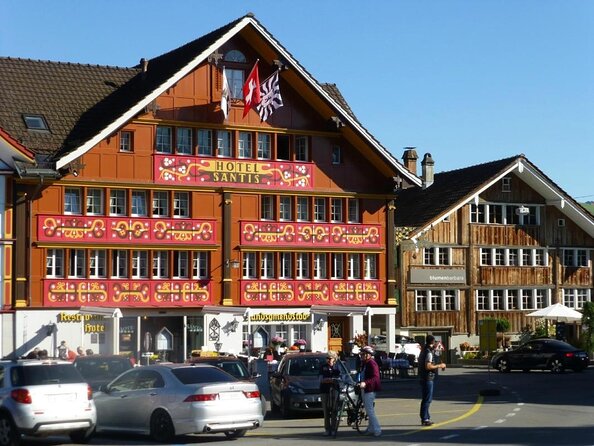
Day 9 brings a different kind of beauty. You ride through Appenzell’s valleys with Säntis, the region’s signature mountain, in view. The route skirts the base of the mountain before heading toward pastureland and the small city of Appenzell.
Appenzell is surrounded by flowering meadows and has a distinct regional identity. It is a good stop after the intensity of Klausen Pass because the riding remains scenic without repeating the same huge climb.
On Day 10, you head northeast through Appenzell’s rolling hills. The area is described as a natural roller coaster, which means plenty of short climbs and coasts. You may not face another massive pass, but repeated rollers can still tire you late in a trip.
The final climb takes you to Heiden. An ice cream stop there is a fitting reward, and you get your first broad view of Lake Constance. From Heiden, you continue to Romanshorn, where you spend the night beside the lake.
Romanshorn is the practical finish of the cycling route. You have crossed a large part of Switzerland under your own power, moving from Lake Geneva to Lake Constance and across several language and cultural zones.
Returning by train through Bern
On Day 11, you leave the bike in Romanshorn while Bike Switzerland sorts out the arrangements. You then board a train toward Geneva or another destination in Switzerland, using the supplied ticket.
The return takes about four and a half hours. Instead of treating that as dead time, you are encouraged to stop in Bern, Switzerland’s capital, stretch your legs, and see the sights.
That is a smart ending. After ten days of riding, a train gives you a comfortable way home without forcing you to cycle back over ground you have already covered. Bern also breaks up the long return and adds a city visit that would be hard to fit into the cycling days.
The tour ends back at the Geneva meeting point, although you can use the return ticket to continue elsewhere in Switzerland. Confirm the exact handoff and train plan before departure, especially if you have a fixed flight or hotel booking.
What the $4,596.97 price means
At $4,596.97 per person, this is a costly cycling holiday. The value depends heavily on what your booking includes beyond the listed route and transport details.
The price clearly buys a carefully planned point-to-point journey, accommodation stops across Switzerland and France, the Lake Geneva and Lake Lucerne boat rides described in the route, and the return train ticket. It also gives you a structured route through areas that would require considerable planning on your own.
The personal support is another part of the value. John from Bike Switzerland is described as quick to answer questions and helpful before, during, and after the tour. That matters on a route with multiple languages, mountain passes, boats, hotels, and a bike return at the end.
Still, do not assume every cost is covered. Ask directly about bike rental, luggage transfers, meals, mechanical help, route files, guide presence, and accommodation standards. The available information does not specify those items.
This tour is easier to justify financially if you value planning support and a ready-made route more than the lowest possible daily cost. If you already know Switzerland well, speak the local languages, and enjoy planning your own cycling holidays, you may find the price harder to defend.
Who should book this route?
You should consider it if you:
- Ride regularly and are comfortable with long climbs.
- Can manage about 75 kilometers and 1,000 meters of climbing on an average day.
- Enjoy six to seven hours in the saddle.
- Want a route with alpine passes, lake roads, and rural back roads.
- Like point-to-point travel more than returning to the same hotel each night.
- Appreciate small towns and regional food, including the chance for fondue in Gruyères.
- Want a rest day in the middle of a demanding ride.
- Prefer a small group or an independent format with planning support.
You should think twice if you are a casual cyclist, dislike sustained climbing, or want generous free time at each stop. The 1,600-meter Klausen Pass climb alone makes this unsuitable for anyone who is not already prepared for mountain riding.
The route may work well for couples and riding partners, including tandem riders, but the demanding mileage still applies. A tandem or slower setup may require extra discussion about timing and support.
Booking, timing, and cancellation
The meeting point is Rue des Grottes 22 in Geneva. The stated operating period runs from June 30, 2022, through June 17, 2026, with hours listed Tuesday through Saturday from 9:00 a.m. to 5:00 p.m.
The tour is commonly booked about 101 days ahead, which is a useful planning guide for a high-demand summer cycling route. Confirmation is provided at booking, and the activity is near public transportation.
You can cancel up to 24 hours before the local start time for a full refund. Changes or cancellations inside that 24-hour window are not accepted for a refund.
The final call
Book this tour if you want a demanding, carefully organized crossing of Switzerland by bike, not a relaxed sightseeing holiday. The strongest reasons are the varied route, the Thun rest day, the lake boat connections, and the chance to ride major alpine roads while moving from Geneva to Lake Constance.
Before booking, get clear answers about what is included in the $4,596.97 price and how independent the daily riding will be. If your fitness matches the stated distances and climbs, this can deliver a memorable Swiss cycling journey. If those numbers sound intimidating, choose a gentler route instead.
FAQ
Where does the cycling tour start?
It starts at Rue des Grottes 22, 1201 Genève, Switzerland.
How long does the tour last?
The tour lasts approximately 11 days.
How far do I ride each day?
You can expect an average of about 75 kilometers of cycling per day, with roughly 1,000 meters of climbing.
How much time will I spend cycling each day?
The tour expects you to spend about six to seven hours in the saddle each day.
What is the hardest climb?
The Klausen Pass is the toughest climb. It involves about 1,600 meters of ascent over 20 kilometers, followed by a 20-kilometer downhill section.
Is there a rest day?
Yes. Day 5 is an extra day in Thun. You can hike near the Swiss Alps, relax on Lake Thun or Lake Brienz, or choose another local activity.
How do I return after the cycling route?
You leave your bike in Romanshorn and take a train toward Geneva or another Swiss destination. The ticket is supplied, and the journey takes about four and a half hours.
Just added around Geneva
- Six Hour Private Tour of The Swiss Riviera★ 5.0 · 11 reviews
- Old Town Geneva Private Walking Tour★ 4.5 · 4 reviews
- Swiss Vineyard Wine Tasting Tour in Vaud★ 5.0 · 5 reviews
- Self-Guided Audio Tour to the Many Faces of Geneva★ 4.5 · 10 reviews
- Geneva Highlights Tour by TaxiBike★ 5.0 · 6 reviews
- Private Trip from Geneva to Annecy in France★ 5.0 · 7 reviews
- Private Trip from Geneva to Swiss Riviera Montreux & Chamonix★ 3.5 · 6 reviews
- Swiss Wine Tasting at Lavaux Vineyards: Private Trip from Geneva★ 5.0 · 5 reviews
Geneva Tours, compared.

Award-Winning Geneva Chocolate &Old Town Tour with Boat Ride (3h)
Read our review →
Chamonix & Mont Blanc Panoramic Sky-Glass Bus Guided Day Trip
Read our review →
Best of Geneva City Tour with optional boat cruise
Read our review →
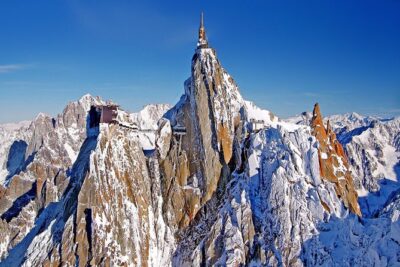
Chamonix & Mont Blanc Guided Day Trip with SkyView Panoramic bus
Read our review →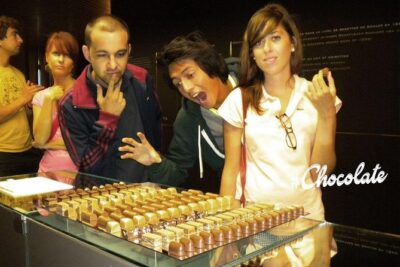
Gruyères Tour from Geneva With Train, Chocolate and Cheese
Read our review →
(STTG04) – Sightseeing Cruise at Geneva with Wine and Aperitif
Read our review →Browse the lists this tour appears in